

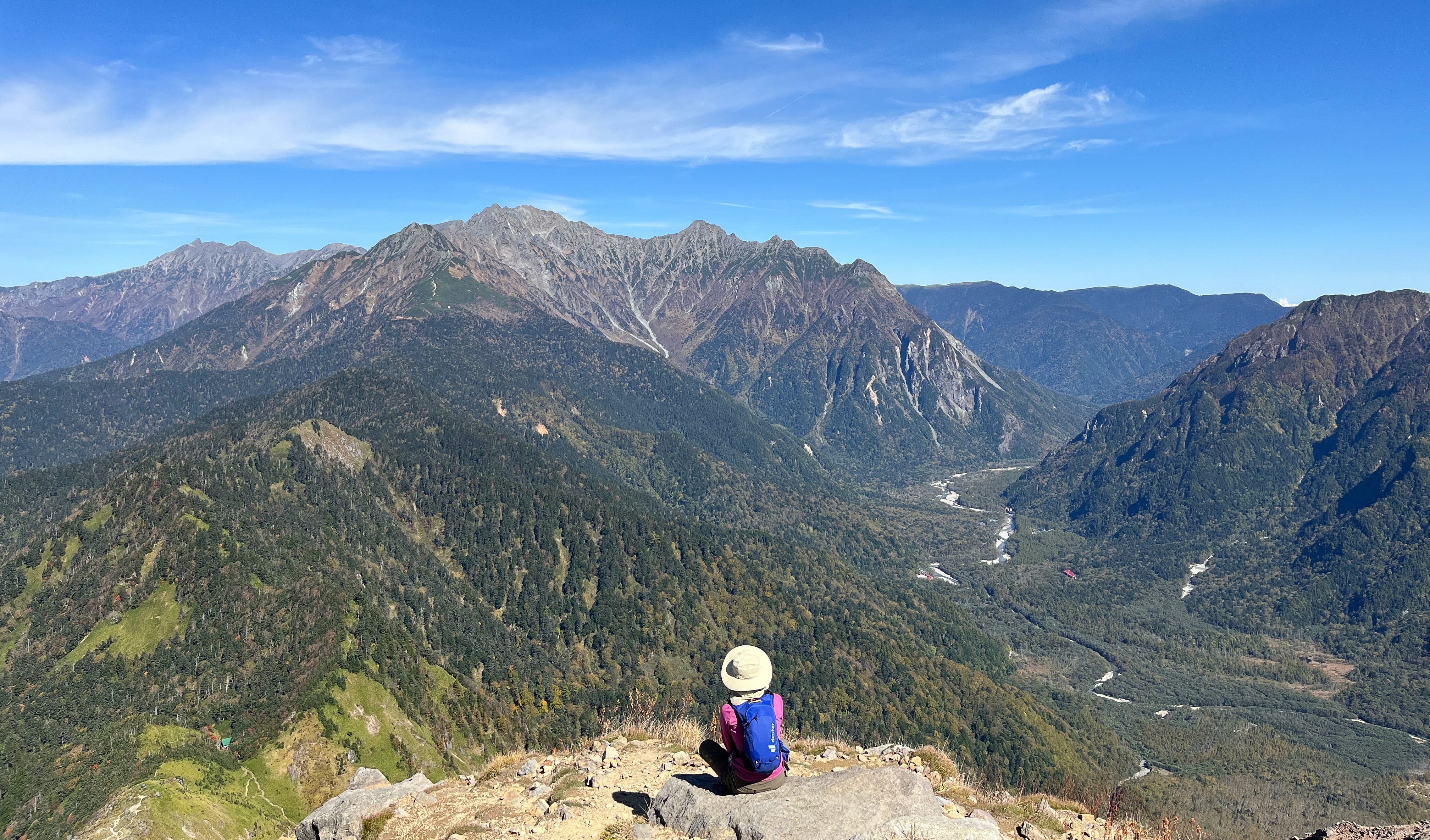
I’ve always been drawn to the mountains. There’s something about walking them that brings me peace. It’s well known that reconnecting with nature is beneficial to mental health. Part of this is undoubtedly due to the exercise you get in the hilly terrain – it’s good to get the blood pumping. But there’s more to it than that. In times of old, Japanese treated mountains as sacred ground, off limits save to specialists like hunters, or holy folk who would go in search of enlightenment. I get that. In modern times, researchers speak of phytoncides, which are antiviral substances released by trees that seem to have a positive impact on people. I get that, too. (I swear I missed getting a case of COVID from my husband in 2023 because we were deep in the fir forests of Washington State.)
In the introduction to my book, I wrote about discovering a cache of diaries after my mother passed away. They weren’t hers, though; they belonged to her grandfather, my great-grandfather, Mitsumaru Tsujimoto. He was a scientist who, at the turn of the 20th century, became Japan’s foremost expert in oleochemistry, the study of plant and animal fats. He’s famous enough in scientific circles to have his own Wikipedia page. He discovered, and named, the substances squalene and squalane, the latter of which is still widely used in the cosmetics industry today.
If only Japan had had a patent office back then, as my mother and aunt used to say! But from the diaries, I learned Mitsumaru was more than just a chemist. He was also a mountaineer. In his own words, he described the climbing of mountains as his “hobby.” Yet the more I read, the clearer it became that he was no mere hobbyist. He could better be described as one of Japan’s first alpinists, but I prefer to think of him with the two words he chose to describe himself, in careful English cursive amidst a sea of Japanese: mountain maniac.
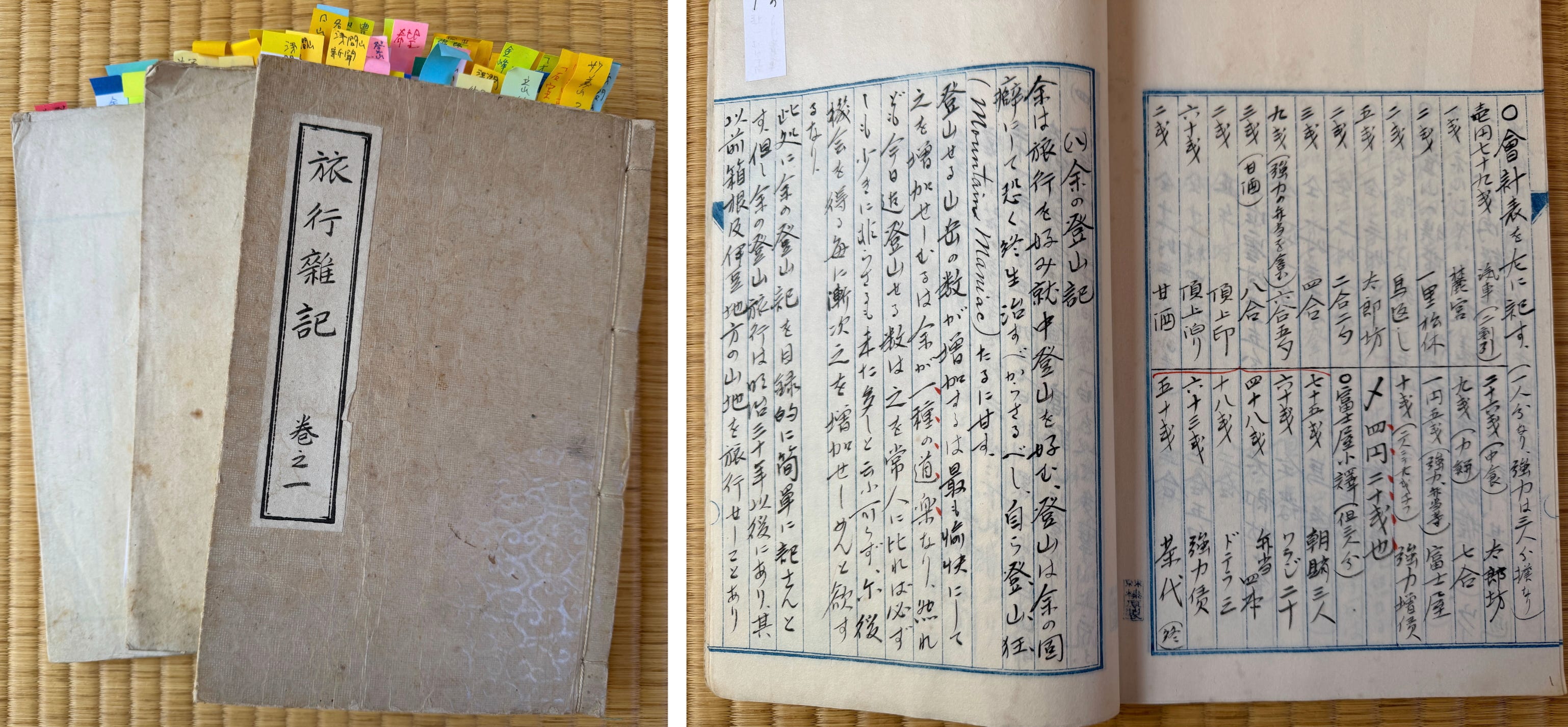
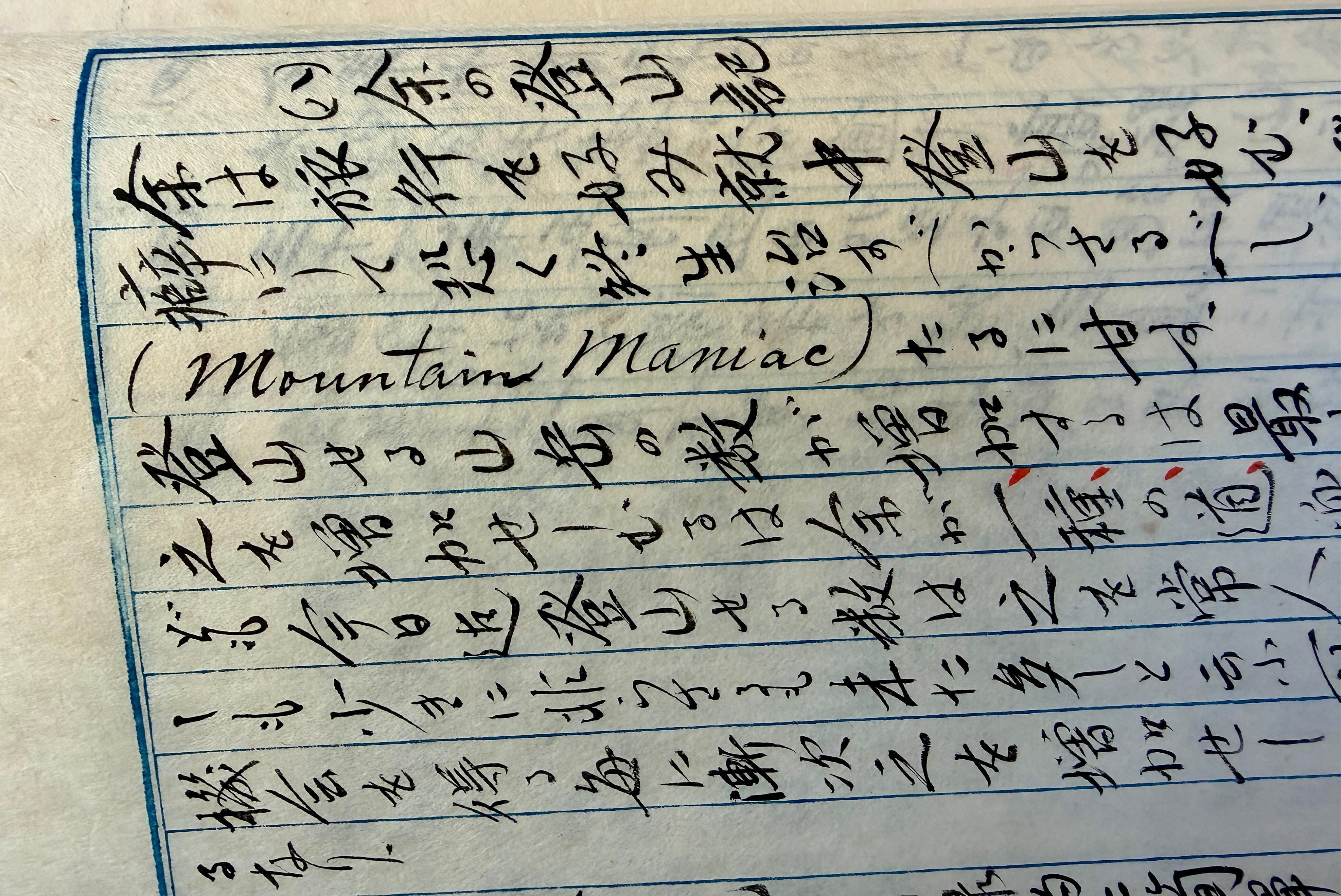
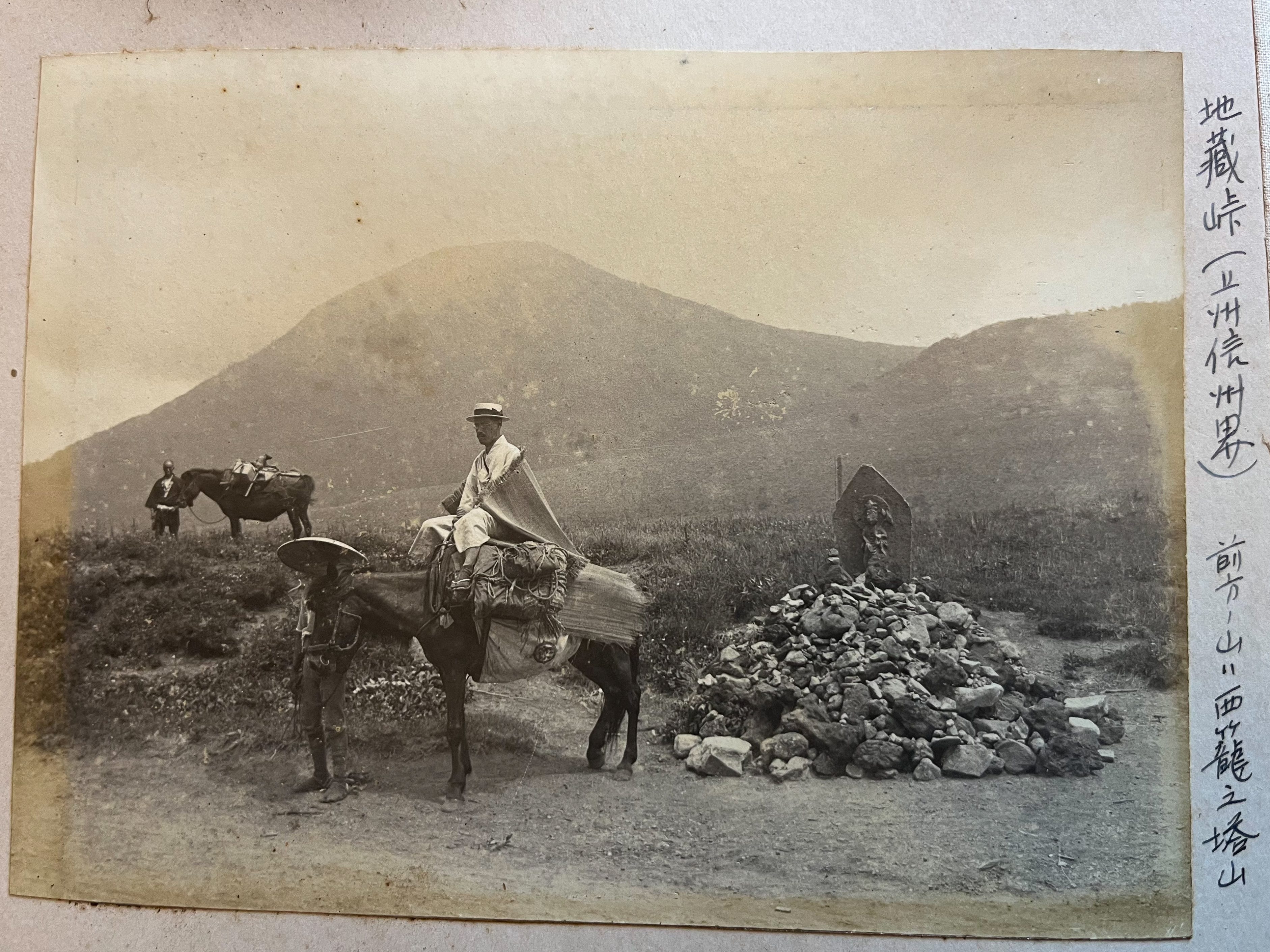
In the beautiful, archaic handwriting of these these century-old books, I unraveled a long forgotten story — forgotten even to my own family. Mitsumaru led a sort of double life. One was as a scientist, the other as a pioneer of Japanese mountain climbing. From his diary entries I learned that he was a founding member of the Nihon Sangaku-kai, Japan’s first alpine club, and a literal trailblazer of many now-famous peaks, the first trails of which he literally bushwacked with the help of friends and local guides. When he was born, in 1877, the mountains were wild and unmapped, literal terra incognita to all but an intrepid few. When he passed in 1940, he’d helped establish mountaineering as a new form of leisure in Japan, and the Japanese Alps one of the most beautiful places in the world to do it.
In the wake of my mother’s death, I found myself leaning heavily on walking and reading to keep myself centered, but I wasn’t hiking seriously yet. In fact I believed that I could never climb high mountains, because I had gotten a terrible case of altitude sickness when my parents tried to take me up Mt. Fuji as a little girl. And compounding things, I wasn’t getting any younger; I had pain in my ankles due to an old ski injury. So I’d always imagined alpine peaks as off limits for me, kind of like how Japanese of old saw them, just for different reasons. But Mitsumaru’s diaries excited me. His writing burst with love for the outdoors and the mountains and everything that lived there. It was impossible not to be swept up in his enthusiasm.
It was on a totally unrelated visit to Kamikochi in Nagano, in fall of 2024, that everything swirled into focus. My husband was, at the time, nursing an injured knee, and I had plotted out a gentle course through the river valley, without much up and down. But after several days of walking, we were feeling pretty good. And I suggested climbing partway up the closest peak, Mt. Yakedake. At 2,455 meters, it isn’t particularly high in comparison to the local “superstars” of Mt. Yarigatake and Mt. Hotaka. But it is alpine, and the highest peak we had ever then attempted. We plotted to hike up a bit and turn back. But something kept us pressing forward. And when we reached the top, we found one of the most breathtaking vistas we had ever seen, a spectacular 360 degree view of the Japan Alps. The photo at the top of this essay was taken then and there.
It was one of those moments when I truly felt I was with the eight million kami. Atop that mountain, I began questioning the limits I’d placed on myself. I wanted to explore. And I had an amazing guide, in the form of Mitsumaru’s writings. With a lot more training, I started to think, I might actually go where he had gone, see what he had seen.
Why was he so self-effacing about his accomplishments? Why was there so little acknowledgement of it in my family? Perhaps because he was having so much fun that he saw what he was doing simply as an avocation. But to me, his contribution is as big as a mountain. And in the last couple years, finally having attained a certain level of fitness and knowledge about navigating that kind of terrain, I have seriously begun following in his footsteps.
Actually, I see it as something more than that. Life moves fast, and society changes at lightning speed. But the mountains do not. Mitsumaru would scarcely recognize the Tokyo I live in today. But the mountains he climbed a hundred and more years ago are another story. They remain unchanged, as beautiful now as they were a century or more ago. When I walk those trails, some of which I know he hacked out of the underbrush himself, I feel like we’re walking together – footstep atop footstep, vista to vista, peak to peak, separated only by time. And even that seemingly unbridgeable gulf starts to shrink and blur when I compare his photographs and sketches to the sights I’m seeing with my own eyes. This isn’t sentimentality or nostalgia. It’s a conversation. I’ve learned many things from it. And over the coming months and years, I’d like to share them with you.
I see the experiences I’ve had in the mountains as my great-grandfather’s gift to me. Over the generations and decades his voice rings clear, telling me there is an entire other world out there, up there, if I open my eyes to it. That voice is what led me to begin training, first in relatively low elevations, and then gradually higher, until I was able to begin summiting the alpine peaks that he had documented in that glorious Meiji-Taisho handwriting of his.
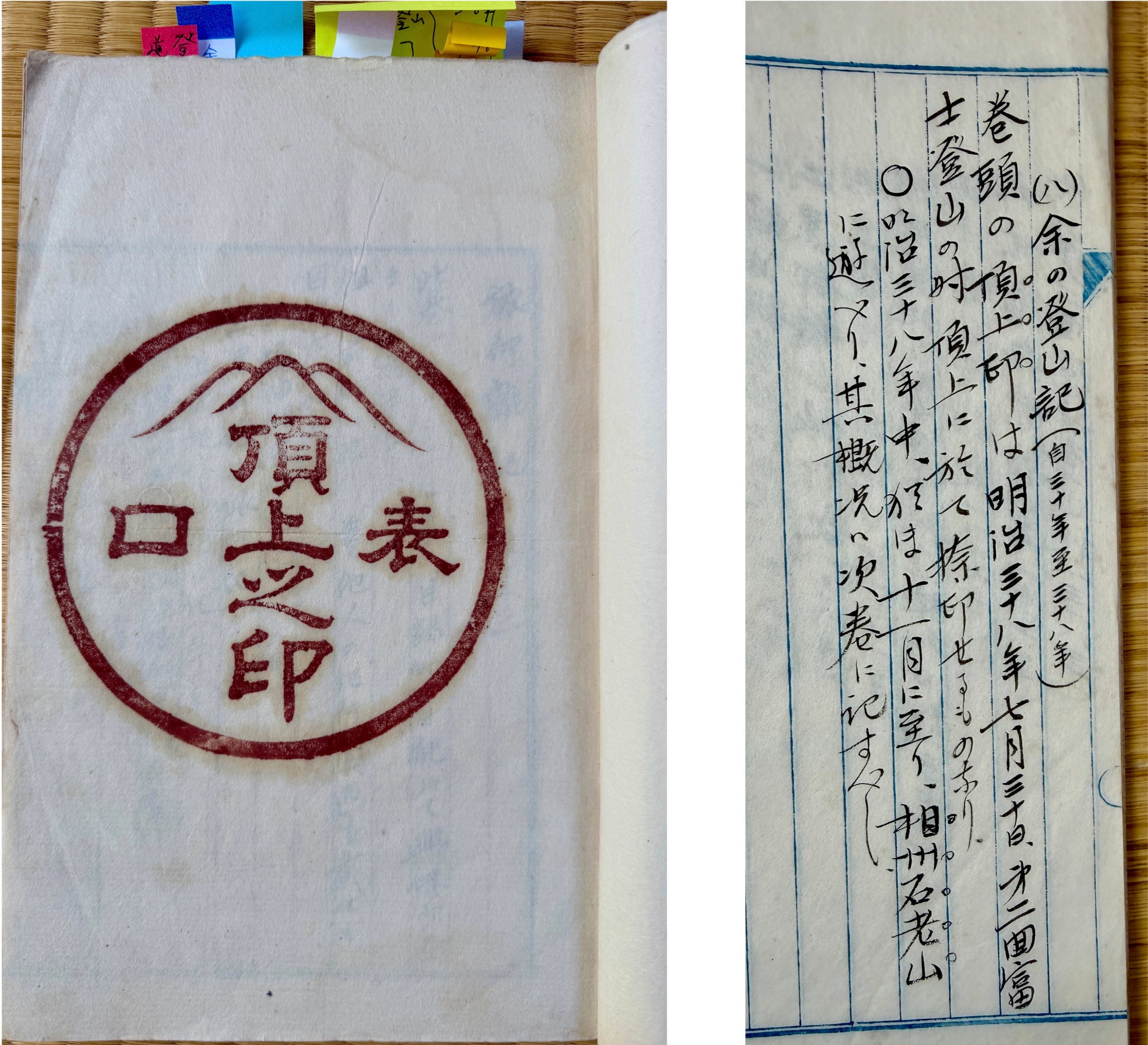
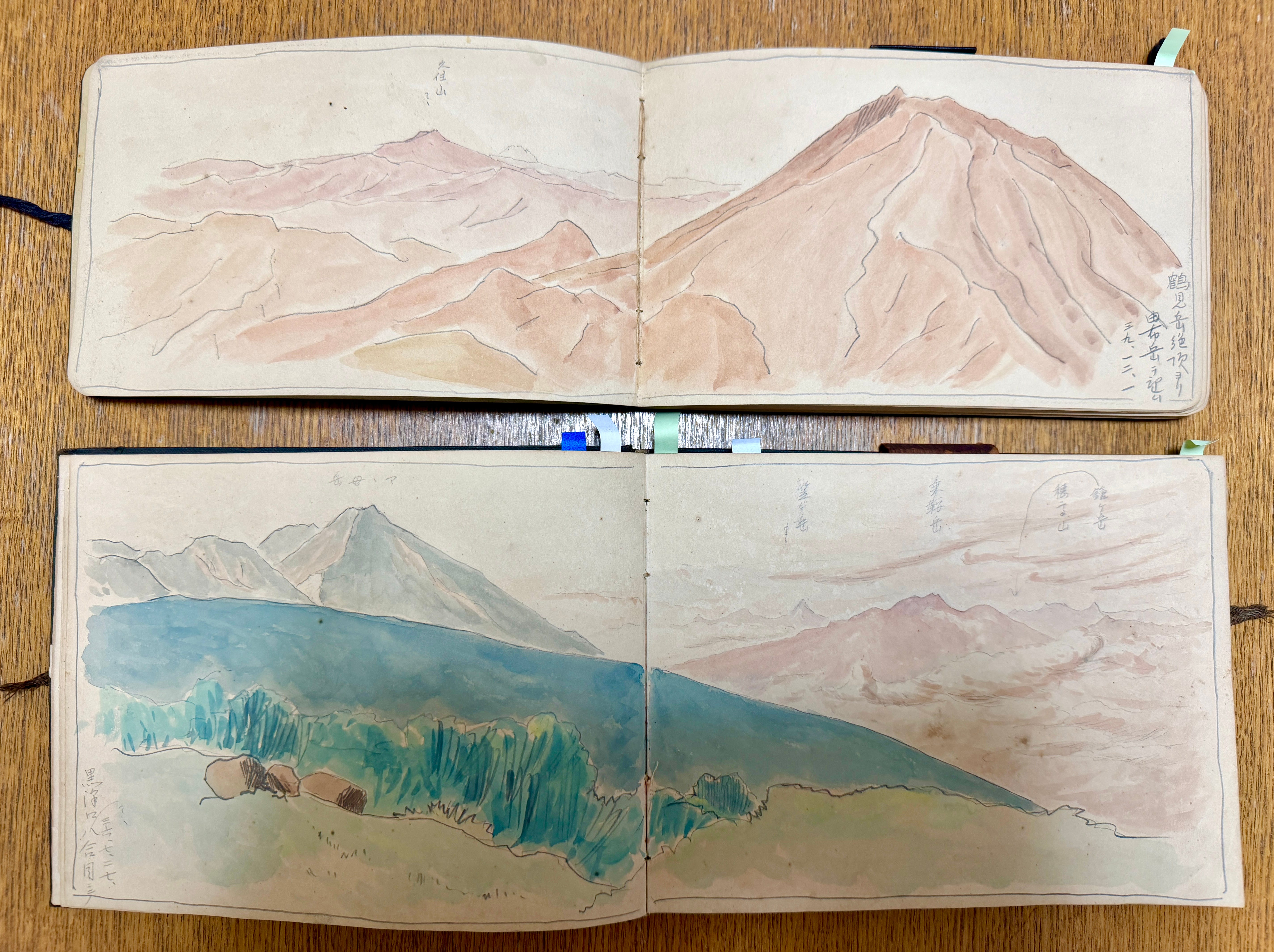
The first of these adventures I’d like to tell you about involves a certain flower that Mitsumaru discovered and named. It is found only in the heights of the Ho’o Sanzan range in Yamanashi prefecture. But this is getting long, so I’m going to save it for the next time.
So many Japanese wrote diaries during the late Meiji Period, but lots of them got lost over the years. How wonderful that your great-grandfather's diaries survived to be discovered by you.
I am impressed that he was so talented in such totally different fields. He must have been a joy to spend time with.
Are you planning to translate and share some entries?
Great story. I guess that means I should get off my duff and explore some of Japan’s alpine trails…