

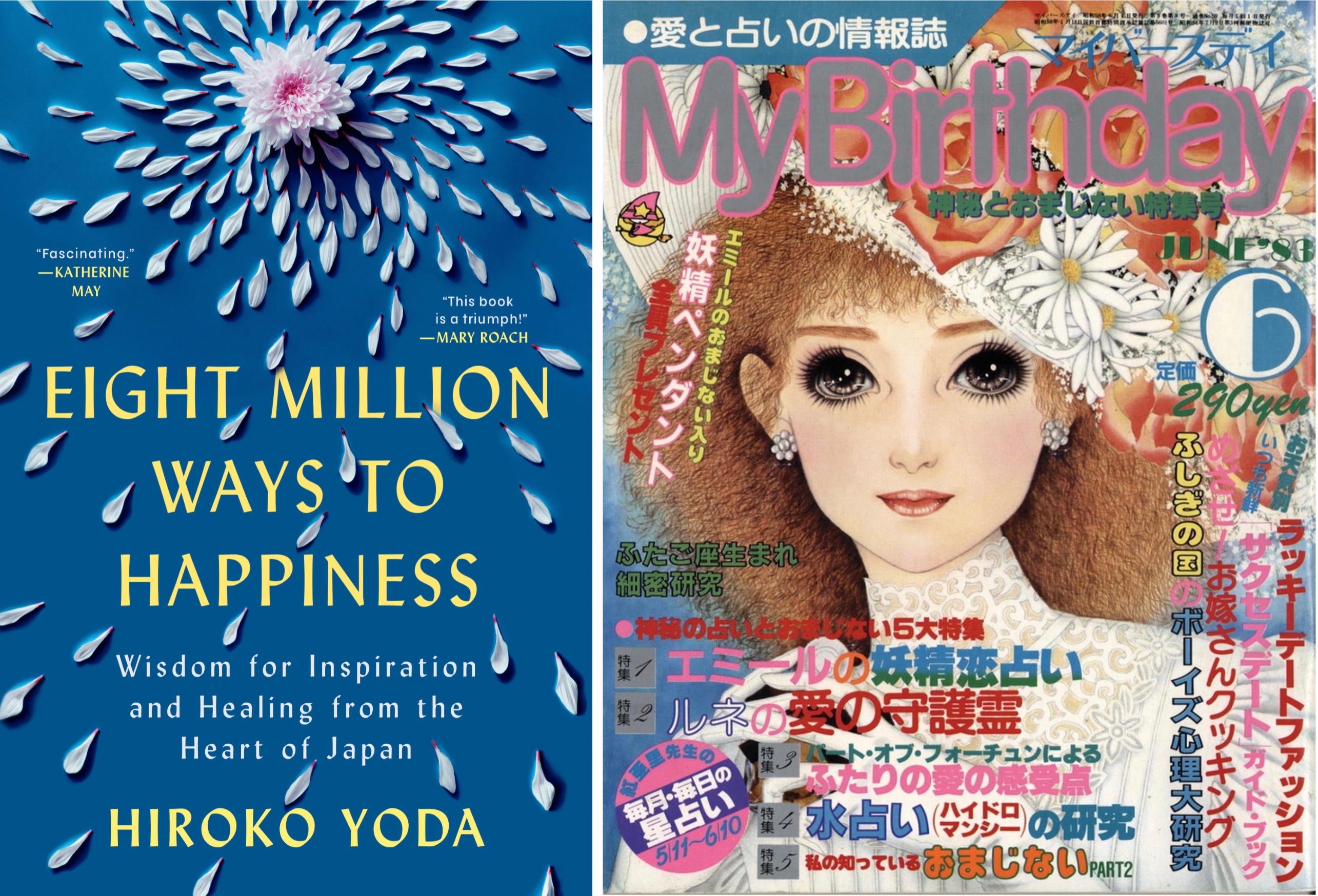
Magazines seem almost quaint today in the era of social media and platforms, but back in the Seventies and Eighties they were incredibly popular in Japan. In many ways the wild variety of magazines for people of all interests and ages acted like a “paper internet” for the era. Kids were no exception. In Eight Million Ways to Happiness, I wrote about a favorite magazine from my childhood: My Birthday. On the first of every month, I would grab three hundred-yen coins out of my little ceramic bank and hustle to the neighborhood mom-and-pop book store to get the latest copy. As I put it in the book,
My Birthday demystified Western style fortune-telling with manga-style illustrations designed to put young readers at ease. Sprinkled throughout were exposés on Tarot cards, famous mystics, and magical incantations. Writing it out now, I realize this sounds like some sort of occult training ground for kids, but I assure you, none of its readers, or even its non-readers, saw it that way. There was no darkness in these pages, only radiant fantasy, less dark arts than Disney Princesses. And it worked. At its peak, the magazine’s circulation hit 400,000 copies a month.
It has been a long time since I last read the magazine, and it went out of print in 2006. But I wanted to bring it up here for two reasons. One is because I stumbled across a vintage copy – and my favorite issue, to boot, the very one I wrote about in my book! – on a visit to Jimbocho, Tokyo’s book district, the other day.
My Birthday was about birthdays, but not in the direct sense. It was a fortune-telling magazine, with lots of articles about horoscopes and Tarot cards and all sorts of things like that. To be honest, those subjects never really interested me. As a preteen what drew me in were the covers. As I wrote,
The cover girls’ enormous eyes always glimmered as though seized by some new passion. Narrow faces were framed in luxurious locks of hair parted just so to reveal gloriously bejeweled tiaras, earrings and necklaces. The backdrops were verdant arrangements of flowers in bloom from exotic orchids to more common place but equally pretty peonies and sunflowers. I don’t know if I ever articulated it as such even to myself, but I can recall the emotions I felt upon seeing my first cover: So this, this was what womanhood would be like!
The covers that drew me in were by manga artist Akemi Matsuzaki, and to this day, I don’t think I’ve seen an illustrator who can top the sophisticated femininity of her art. Which brings me to the second reason: one of my favorite galleries in Tokyo, the Yayoi Museum in Nezu, is having an exhibition of the cover art by both Matsuzaki and Fumiko Nozaki, who took over in the Eighties. It runs through September 2026. Here’s the link.
The Seventies and Eighties weren’t just a boom time for magazines. Japan was also experiencing what cultural historians call our “first occult boom.” This was a moment when mysticism, much of it foreign, emerged from the shadows as mainstream entertainment in Japan: Uri Geller, ESP, cryptids, all of that kind of stuff. My Birthday was a crossing of these two cultural trends.
Looking back at the magazine for the first time in decades, I’m struck by several things. One is how much I love Matsuzaki’s art, even today. The second is how much of the content I skipped reading as a kid. In fact, most of it! I hyperfocused on anything that radiated what one might call “cute mysticism” – like fairies or elves or Alice in Wonderland types of things. In that way kids do, when I seized on something like that I’d read it over and over.
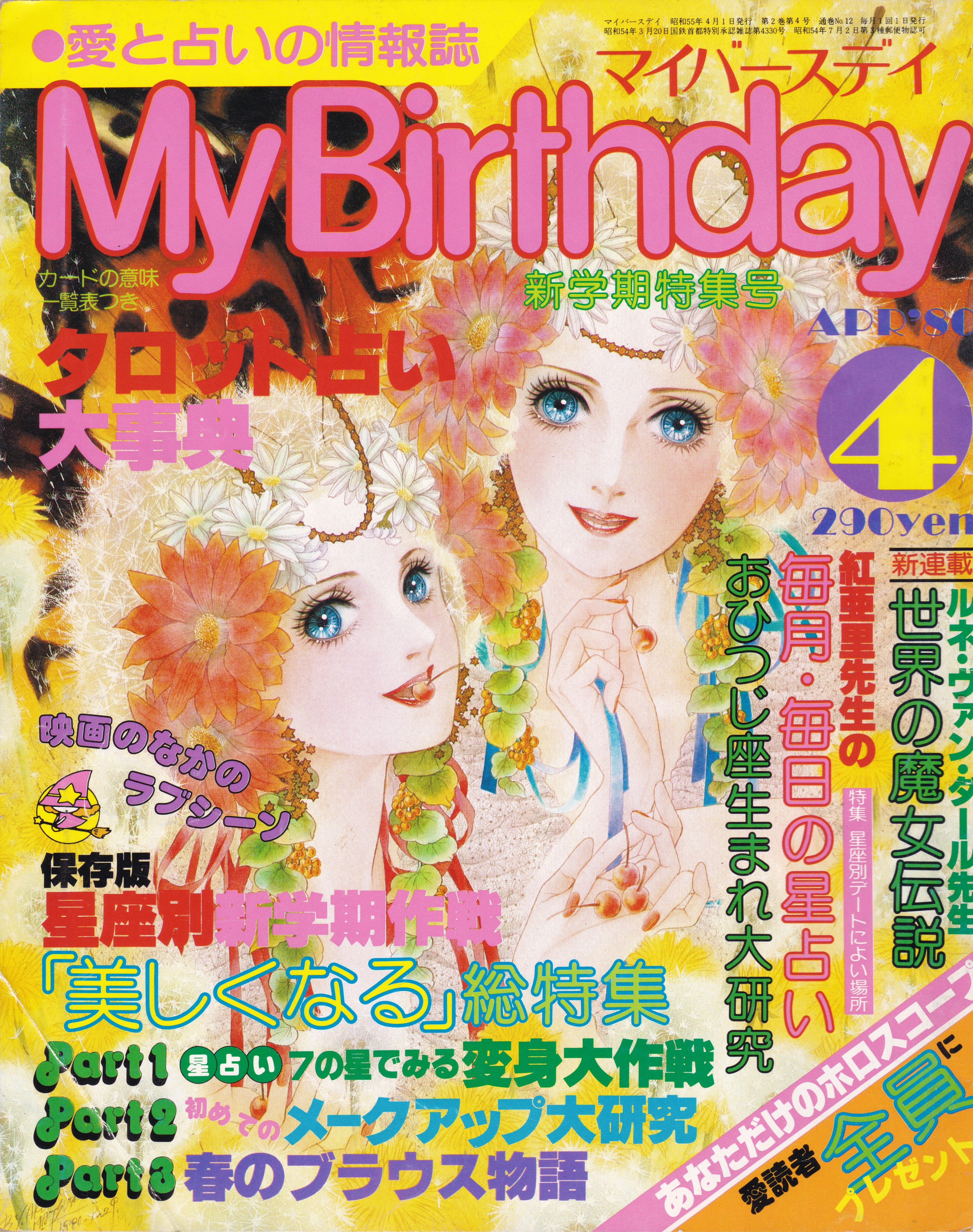
The book store in Jimbocho had a few more antique My Birthday magazines. I chose this one because it featured Aries, which is my sign. And of course, I remembered the cover. It was published in the early 80s, which was around the time I discovered the magazine, so this could well have been the first issue I ever purchased. There’s actually an old slang term for this, from the heyday of magazines in the Showa era: jaké-gai, literally “buying the cover.”
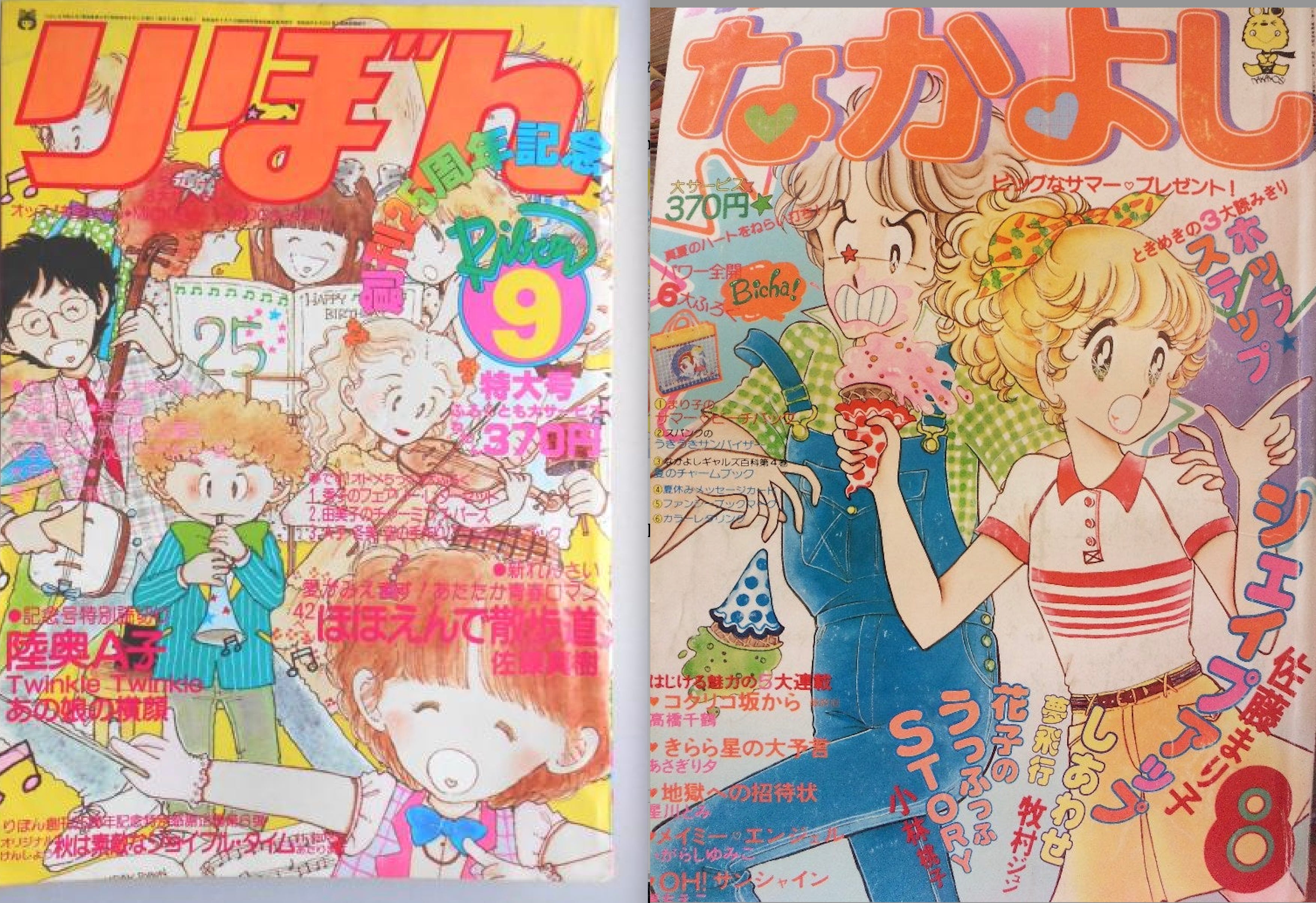
One of the things that appealed to me about Matsuzaki’s art was how different it was from the shojo manga (manga for girls) aesthetic that predominated in the comics I was reading at the time. As was common in the era, my parents discouraged my sister and I from reading manga. But very rarely, such as when we would go off on a family trip, my mother would buy copies of the latest shojo weekly, like Ribon or Nakyoshi, to keep my sister and I quiet on the journey.
The below were shojo manga comic covers that were published in the same year.
Now, here’s My Birthday. Look at the difference.
Here are a few more illustrations from Matsuzaki to drive it home.
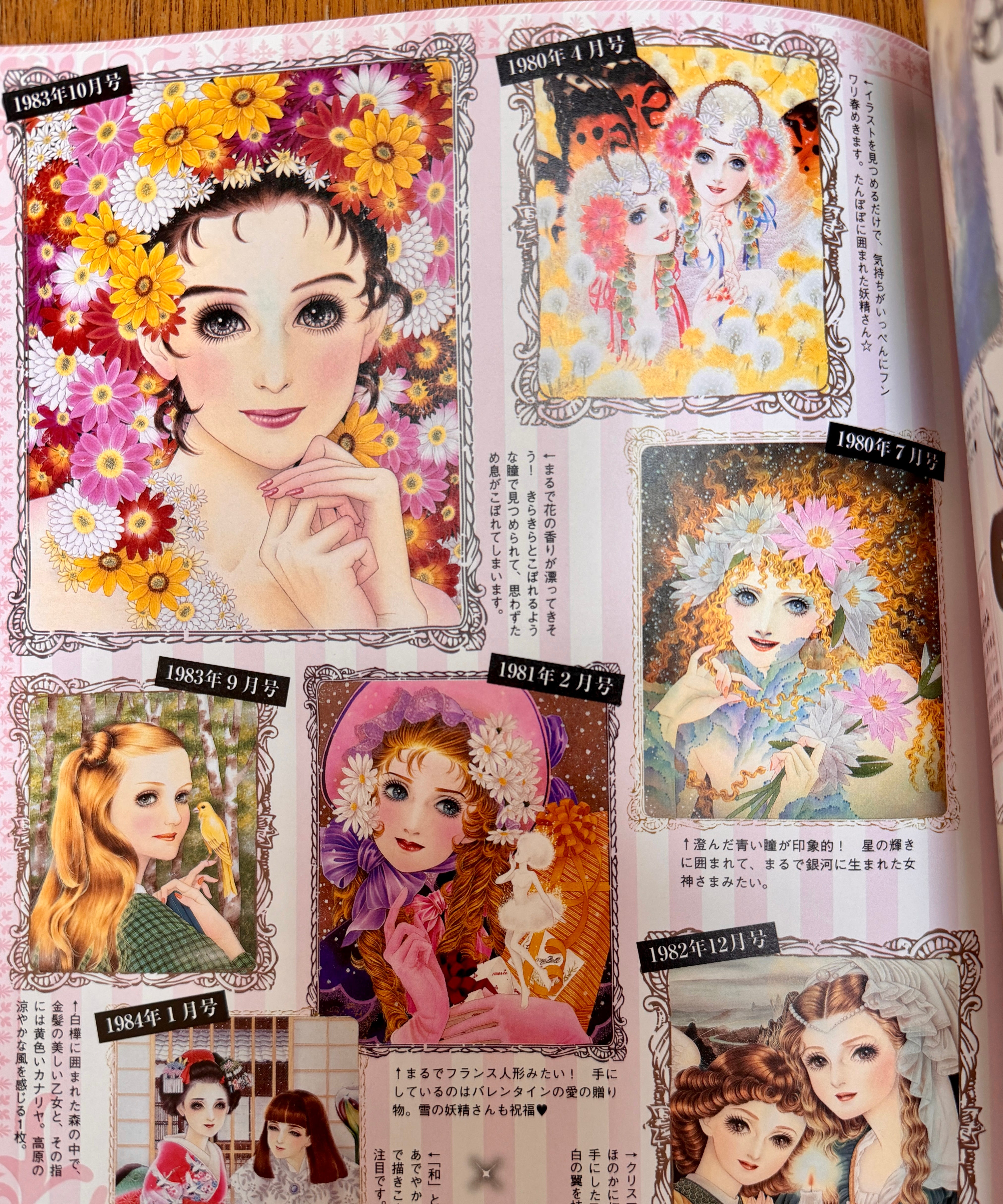
I think you can easily imagine how this might enchant a preteen girl. But looking at it another way, I really was judging a book by its cover! That was precisely why I skipped so many pages, trying to find content inside that was equally evocative, and why I read those sections over and over.
Reading My Birthday unlocked a lot of memories. One being a reminder of how little interest I had in fortunetelling. That said, it was mildly intriguing to learn that Vincent Van Gogh and Seventies starlet Meiko Kaji shared my sign, and I chuckled when the magazine suggested my “birthday movie” could be The Getaway, “because Steve McQueen was born on March 24th, making him an Aries.”
I was also shocked to learn how much of the magazine was dedicated to unrelated articles about makeup, movies, anime, and music. A discussion of Osamu Tezuka’s anime Phoenix being screened at the U.N. made a certain kind of sense, but what on earth was an article about Francis Ford Coppola’s Apocalypse Now doing in here? The one that really made me laugh was an essay titled, “Why don’t you take your boyfriend to the ABBA concert?” I had no memory of any of this stuff at all. It must have sailed right over my head as a girl.
But then I hit paydirt, in the form of one of those articles I’d read over and over: “A Beginners’ guide for good l’il witches.” It describes in great detail how to make the accouterments of a “white witch,” from carving your own want to crafting your own costume. There’s also instructions about how to make a “magic circle of protection.” I remember finding it difficult to follow as a kid – the article told you to cut a tree branch under the full moon to make the wand, and the “fairy dress,” as they put it, looked seriously uncool even to my preteen eyes. But I loved the anchor illustration.
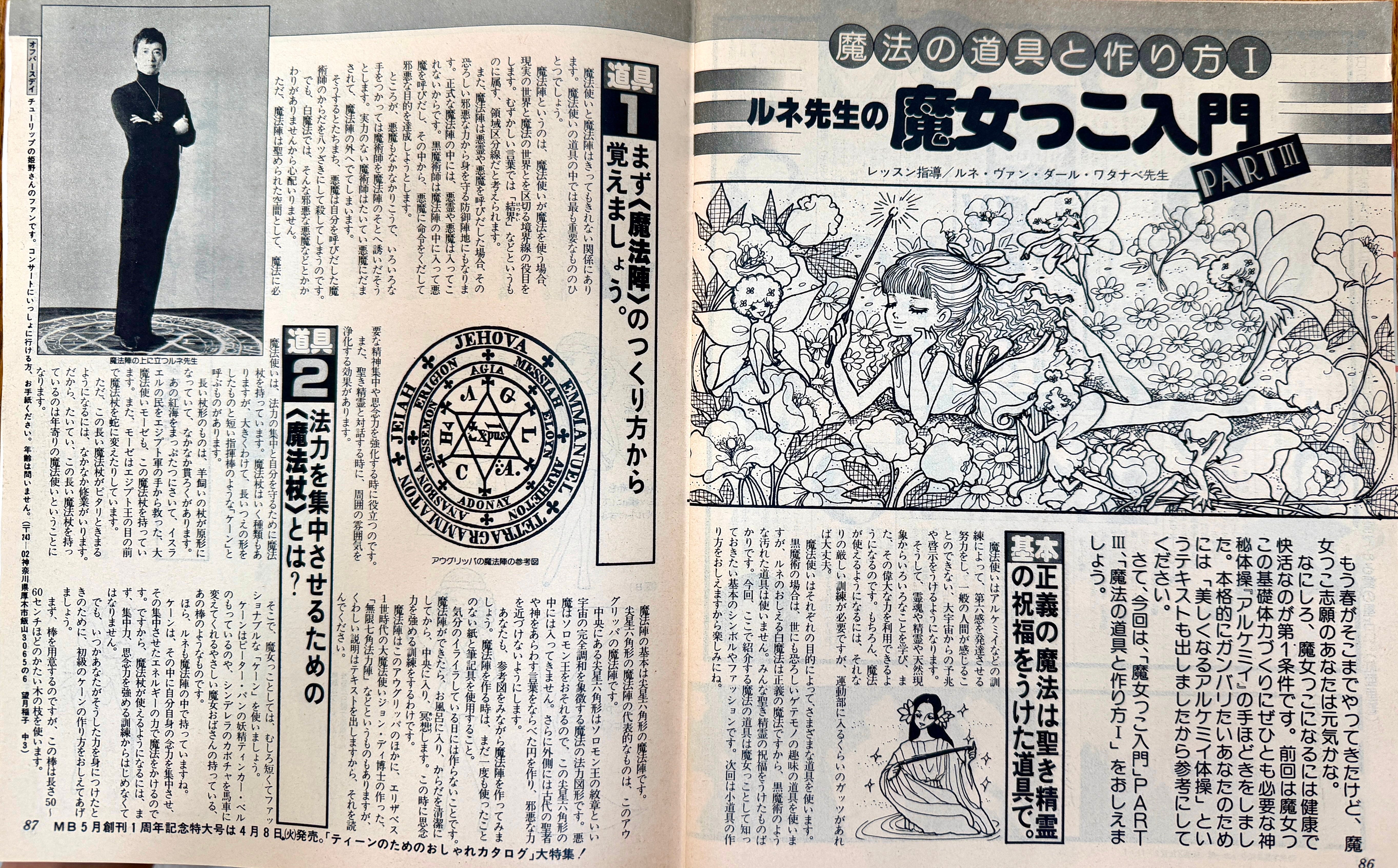
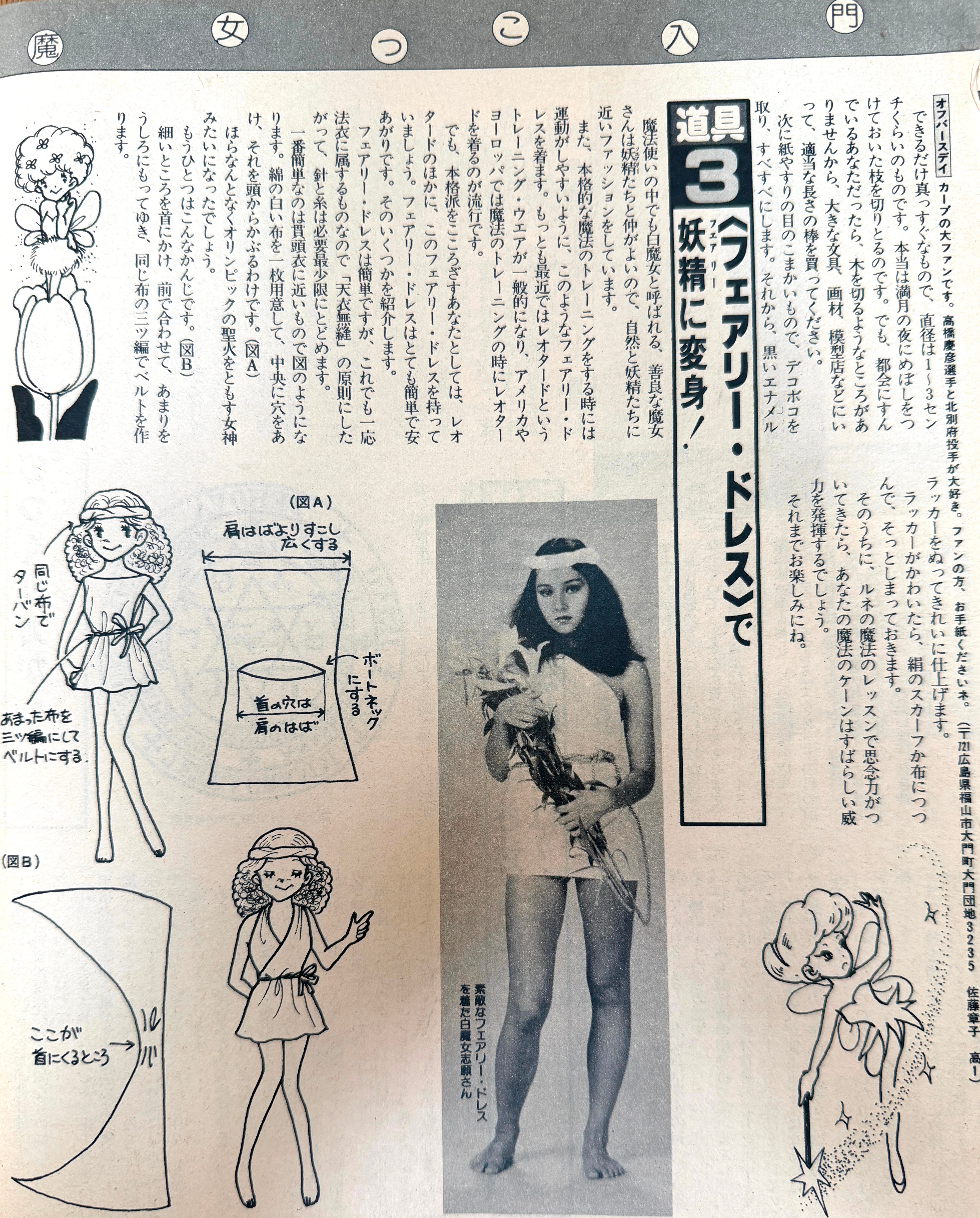
The sight of that pentagram in a kid’s magazine probably would have touched off a Satanic panic in the US, but trust me, this was less about spirituality than it was about capturing a foreign aesthetic. And looking back, perhaps my fandom for My Birthday was an extension of my interest in a certain anime of the era called Majokko Megu-chan, or “Megu the Little Witch.” (I sometimes sing that theme song at karaoke.) It’s interesting watching kids obsess over Harry Potter today, knowing a similar fad played out decades earlier. I guess some things never change.
But some things do. In this case, My Birthday’s cover illustrator. Not long after I started reading regularly, the editors replaced Matsuzaki with Fumiko Nozawa, who drew in a more manga style. Now, I have nothing against Nozawa. She’s obviously a talented illustrator and storyteller. But with Matsuzaki’s departure, the magic seems to have faded for me. I stopped reading soon after. Until stumbling across that issue in Jimbocho, decades later.
Thanks for joining me on this trip down memory lane. I thought some of you might be interested in knowing more about the magazine that I’d written about in my book. Plus, I found that copy, learned about the exhibition, and just now learned that a book collecting the magazine’s cover art has just been published as well. To put it in My Birthday terms, the stars aligned!
Let's hope Jimbochō will remain for a long long time! It's a great place to find little treasures, like an issue of your cherished My Birthday magazine, and vintage books and prints from the Meiji and Taisho period that help me with my research. It's one of my favorite spots in Tokyo.
Wonderful article, thanks for sharing! I love magazines and still subscribe to many, and I LOVE LOVE LOVE Japanese magazines even though I don't know Japanese. What I love best about them is the sensory overload of how many photos they include on each page. My favorite is Figure Oh! (Figure King?), I feel like Matt may have been in that one right? But I'm also a densha otaku so I love the train magazines too, and I'm more of a Brutus guy than Popeye but I learned a lot about both those magazines from Matt as well. :) I finally made it to Jimbocho my last visit to Japan in April and was blown away -- and that was only from the two stores I got to! Can't wait to return.