

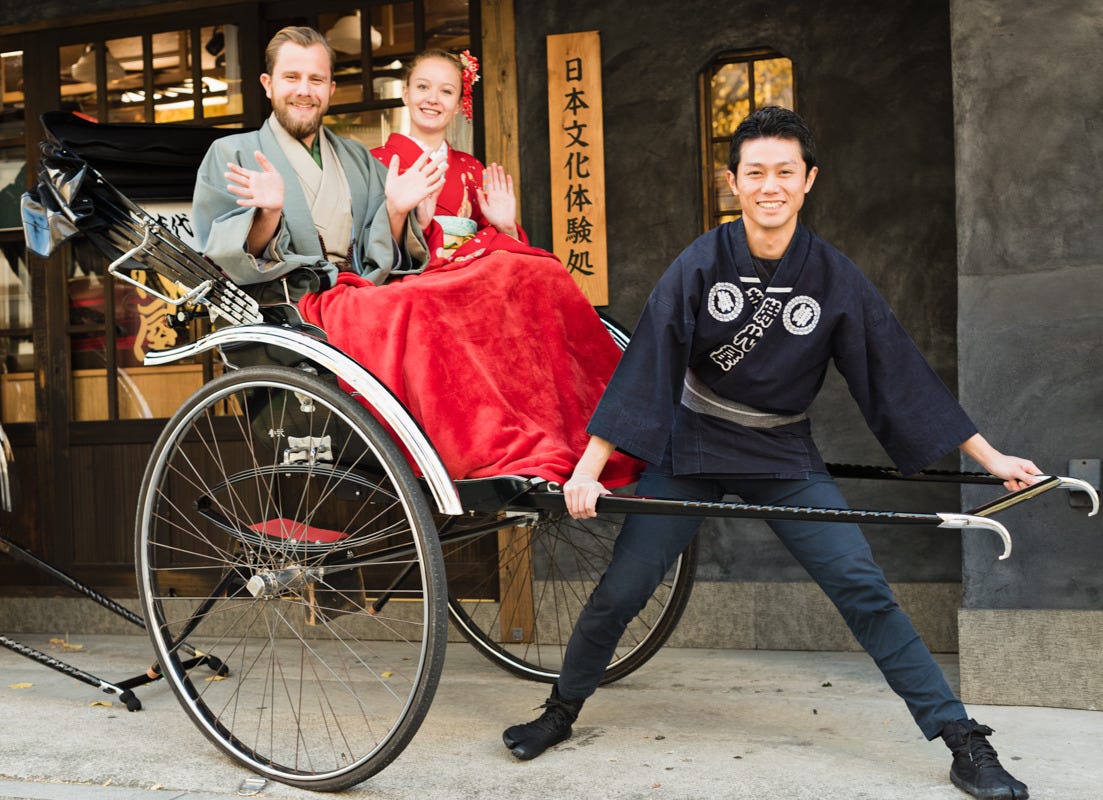
If you’re a reader of this newsletter, or my book, it’s no secret that I love wearing kimono. This makes me something of a minority, for the vast majority of Japanese wear Western-style clothing in daily life.
Traditionally speaking, there are many rules to follow in the wearing of kimono. To learn them, one needs to be taught, either over time by their elders, or at kimono school, such as the one I went to for several years. Rules implies rigidity, but it’s not like there are fashion police out there. More simply, it’s a form of etiquette. Even in the modern era, when kimono culture is on the wane, knowing which kimono styles and patterns are most appropriate for a given situation is still seen as a social grace.
But there is one place in Japan where all the rules go out the window. Ironically, it’s also where you can see more people in kimono than almost anywhere else in public. It is Asakusa. I know this from personal experience, for dressing up in a kimono and going to this most traditional of Tokyo neighborhoods is one of my favorite pastimes.
Asakusa, and more specifically the Senso-ji temple area, is brimming with inbaundo, “inbounds,” as the government calls tourists here. And I have seen some really wild kimono styles there. This doesn’t bother me – far from it. While I prefer to follow traditional etiquette, it’s a free country, as Americans say. In fact I am starting to believe that inbound tourists are creating a totally new form of kimono culture without even realizing it.
As my husband wrote about several months back, the government is heavily promoting tourism. In 2025, almost 43,000,000 people visited from abroad. And there has been an interesting shift in the way many of these tourists spend their time here.
For a good while, the focus was on purchasing things to take back home. Pre-pandemic, I’d often see tourists, particularly from Asian countries, engaging in what Japanese call bakugaé: literally “explosive-buying,” slang for buying up everything in sight. It wasn’t uncommon to see visitors laden with bags and boxes of stuff they’d bought: home appliances, cosmetics, even disposable diapers.
Nowadays, at least as far as I’ve seen, tourists don’t seem to spend a lot of money on purchases. Instead, they are spending their money on experiences. In Asakusa, this takes the form of renting kimono to wear around the streets. I’ve been frequenting Asakusa several times a month for the last few years, so I’ve seen the rise of this new fad for kimono cosplay develop with my own eyes. Let me give you a quick lesson in traditional kimono etiquette so that you can understand this shift, and how it compares to Japanese styles of wearing kimono.
As I said, we have many customs when it comes to kimono. One of the most important is matching the season. Kimono have beautiful patterns, most of which have symbolic meanings. Some are obvious, like snow patterns for winter, or sakura cherries for spring. Others are pegged to more specific times: hina-doll patterns are worn in the days leading up to Girls Day on March 3. Rose patterns are only worn when roses bloom, which is May.
It is also customary to match the formality of the occasion. Events like weddings, funerals, or the annual coming-of-age day for the latest crop of twenty year olds all expect very specific types of kimono, traditionally speaking. And when you think about it this makes sense. You aren’t going to wear something bright and chipper to a funeral. Nor would you want something dour for a celebration.
There are further divisions within these events. It probably won’t surprise you to hear a bride wears a very specific form of kimono. What about guests? Well, are you a family member or an invitee? If you’re a close relative, you’re traditionally going to want to wear what is known as a kuro-tomesode. If you’re attending as a friend, a plain pattern is the safest choice. And how old are you? Should you be in your twenties, a colorful furisode would be a wonderful choice. Furisode feature long sleeves and bold, bright patterns, which really pop out and attract attention. They’re considered the privilege of young women. But if you are married – even as a twentysomething – they’re out. Then you’re (traditionally) obligated to wear a more formal kimono with short sleeves.
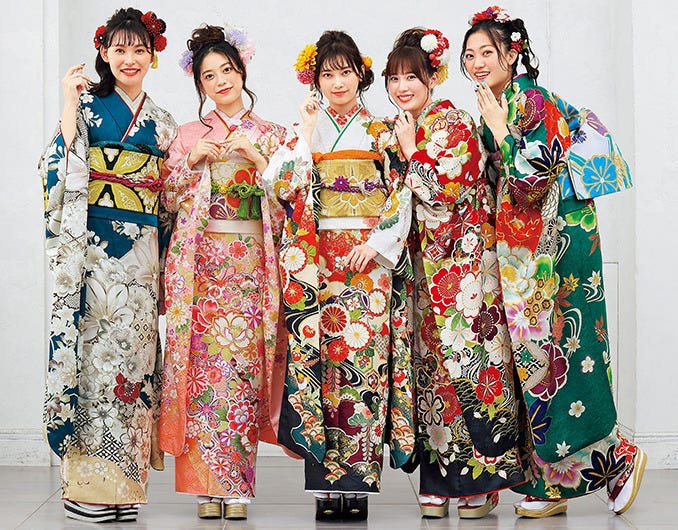
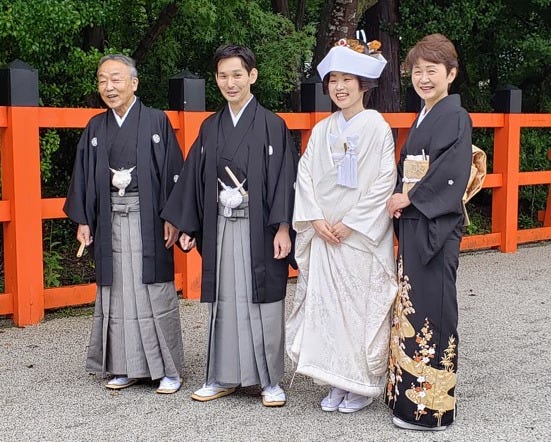
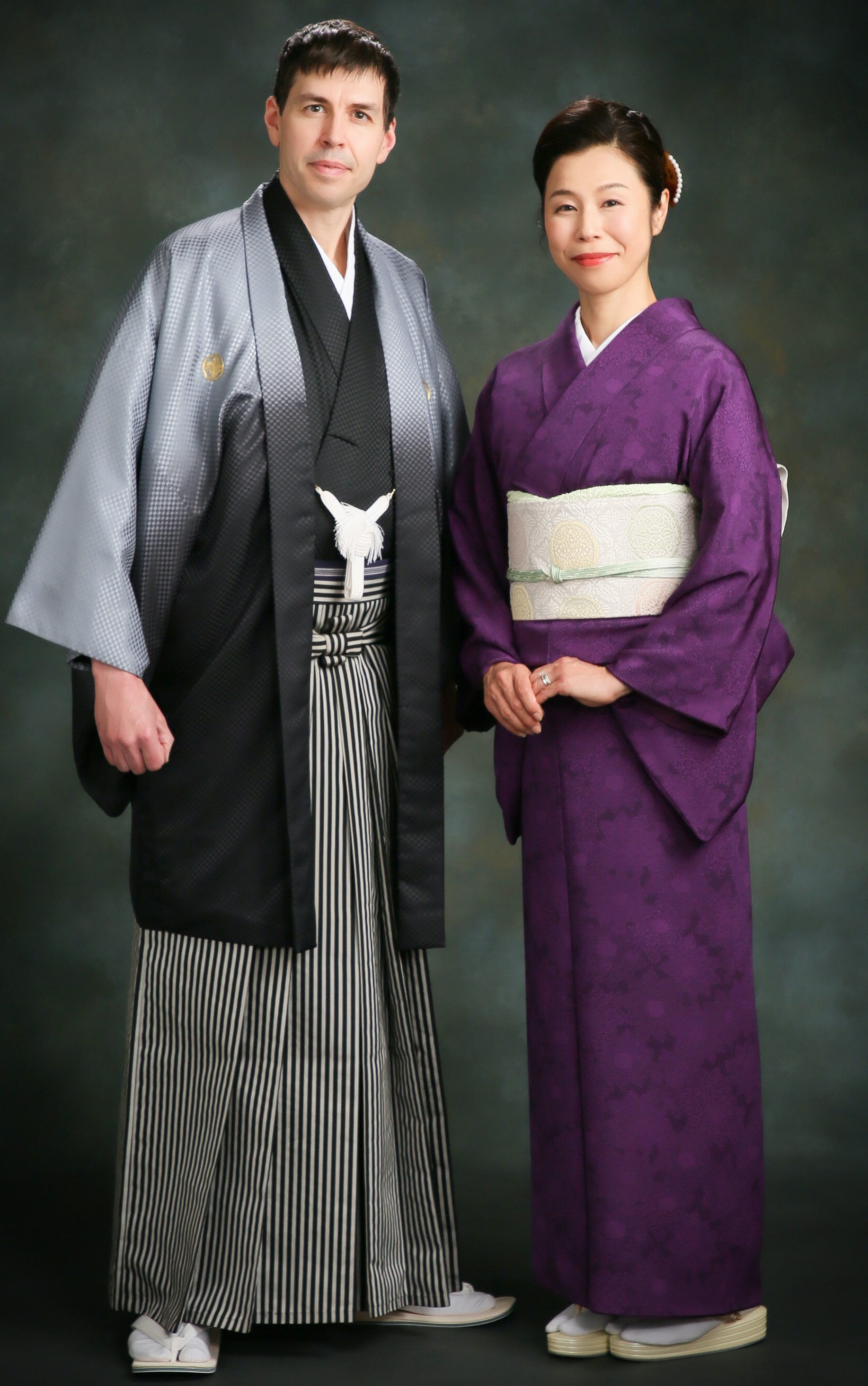
One of the most fundamental things that can throw outsiders for a loop is that, in the traditional kimono worldview, you aren’t wearing the kimono for yourself. Kimono are fashion, but we wear them to show respect for someone or something. This means you’d never wear anything that might shift the center of attention away from the occasion. Weddings? No-brainer. But it’s true for all events, really.
For instance, if you were attending a graduation ceremony, even as a parent, you wouldn’t want to overshadow those getting the spotlight by wearing something super flashy or opulent. And the center of attention isn’t necessarily a person. In spring, it is customary to avoid wearing kimono with cherry blossom patterns to hamami flower-viewing parties. Why? Because the center of attention for cherry blossom parties are the cherry blossoms themselves! Now, it isn’t like anyone is going to yell at you if you happen to wear a sakura pattern to a hanami. But to those in the know, you might seem like, well, a bumpkin.
So those are just a few examples. There are many others. As I often say, Japan is really flexible when it comes to spirituality, but it’s really rigid when it comes to society. You can roll with this or not. I chose to – that’s why I took kimono classes!
Which brings us back to Asakusa. I usually go alone, strolling the shopping arcades, paying my respects at the temples, and maybe stopping at a cafe to write and sip some coffee. These are considered casual occasions, kimono-wise. So I always pick a casual one: tsumugi, for example, which is considered the all-purpose wear of the kimono world, kind of like how the West sees jeans. I tend to go for more colorful patterns, and because Asakusa is such a culturally historic place, I often choose antique kimono for a retro feel. I like to go for a Taisho-era or early Showa vibe. Asakusa’s that kind of place.
It was in fact at a cafe that I started to notice more tourists in kimono. I opened the door and saw the room completely packed with Asian women, all dressed in ultramodern kimono. Really ultramodern, like something out of a Harajuku boutique, with laces and ruffles, the fabric beaded with faux pearls. This really shocked me. Were kimono making a comeback? It wasn’t until I was finally seated that I realized: everyone was speaking Chinese. Aha. These were tourists.
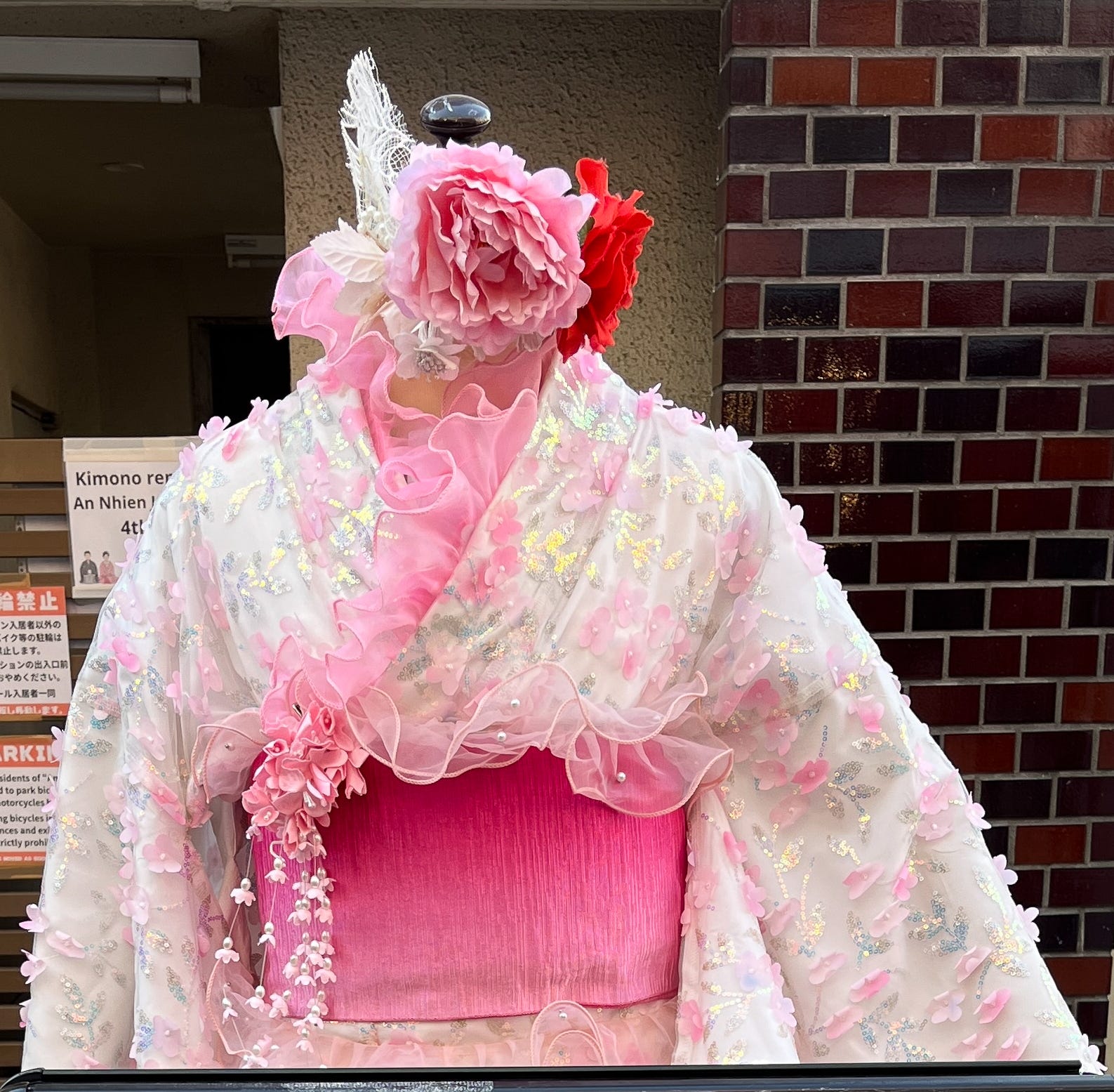
Some months after that, I saw a middle-age woman wearing kuro-tomesode, a formal black kimono ornamented with gold and silver thread. Now, the only time you ever wear a kuro-tomesode is when a close relative, perhaps your own son or daughter, is getting married. We were on the grounds of a Shinto shrine, so I assumed there would be a wedding happening soon. In fact, I was getting ready to say “congratulations!”
But right before I opened my mouth, I noticed she was accompanied by a man, also in kimono. But he also had a plastic sword strapped to his waist. And then I noticed both were wearing sneakers. I was shocked again – not because they were tourists, but by the quality of the kimono they were wearing. The ladies in the cafe looked almost like gothic lolitas, pure cosplay. But these two wouldn’t have looked out of place at a wedding – minus the sneakers and sword, of course.
For a long time, rental kimono were really cheap – polyester fabrics, or cotton yukata robes. In a sense these fabrics matched the “formality level” of tourism, which is to say “informal.” But it seemed the rental shops were evolving beyond their simplistic origins to offer visitors a wider array of choices to choose from.
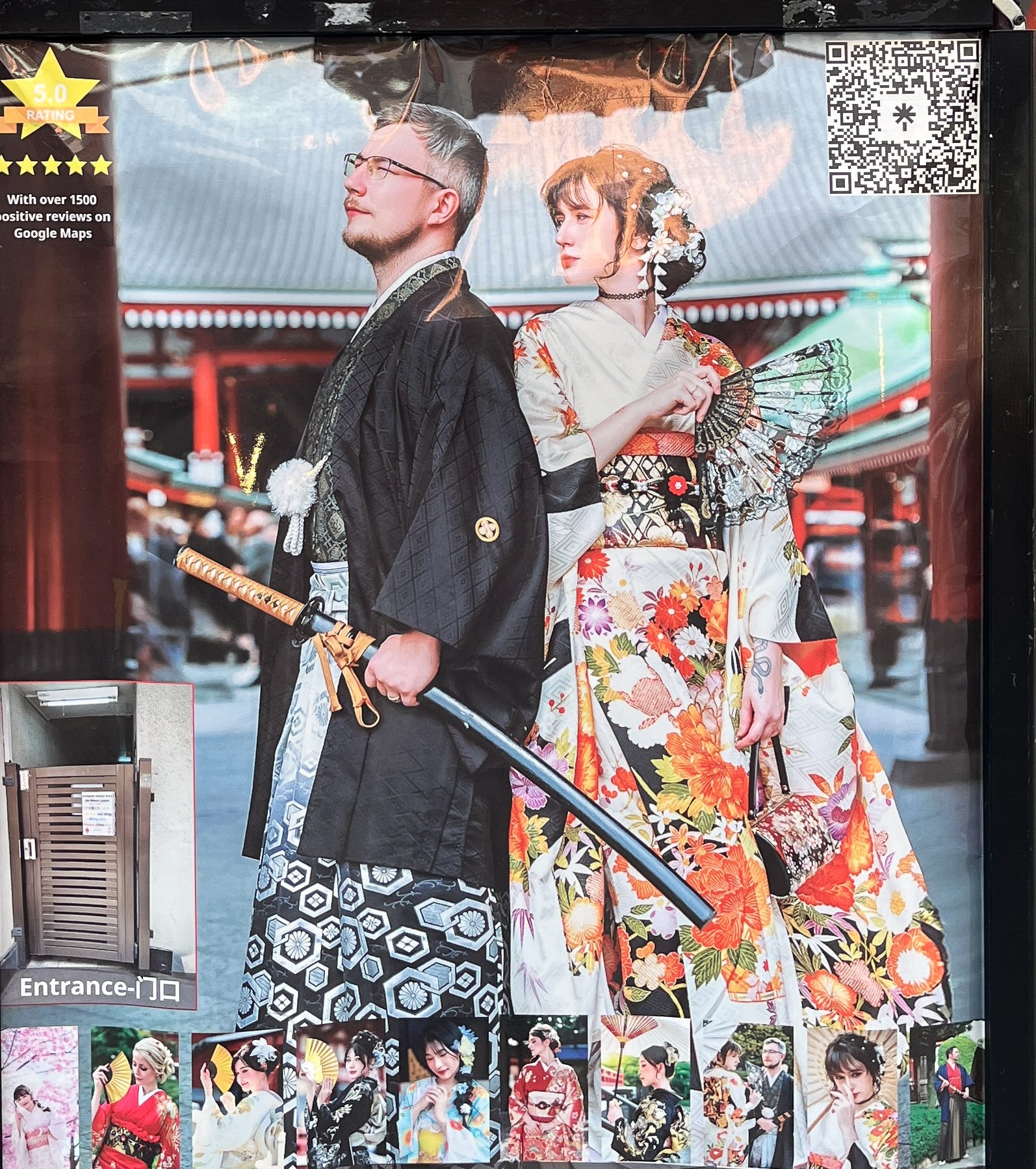
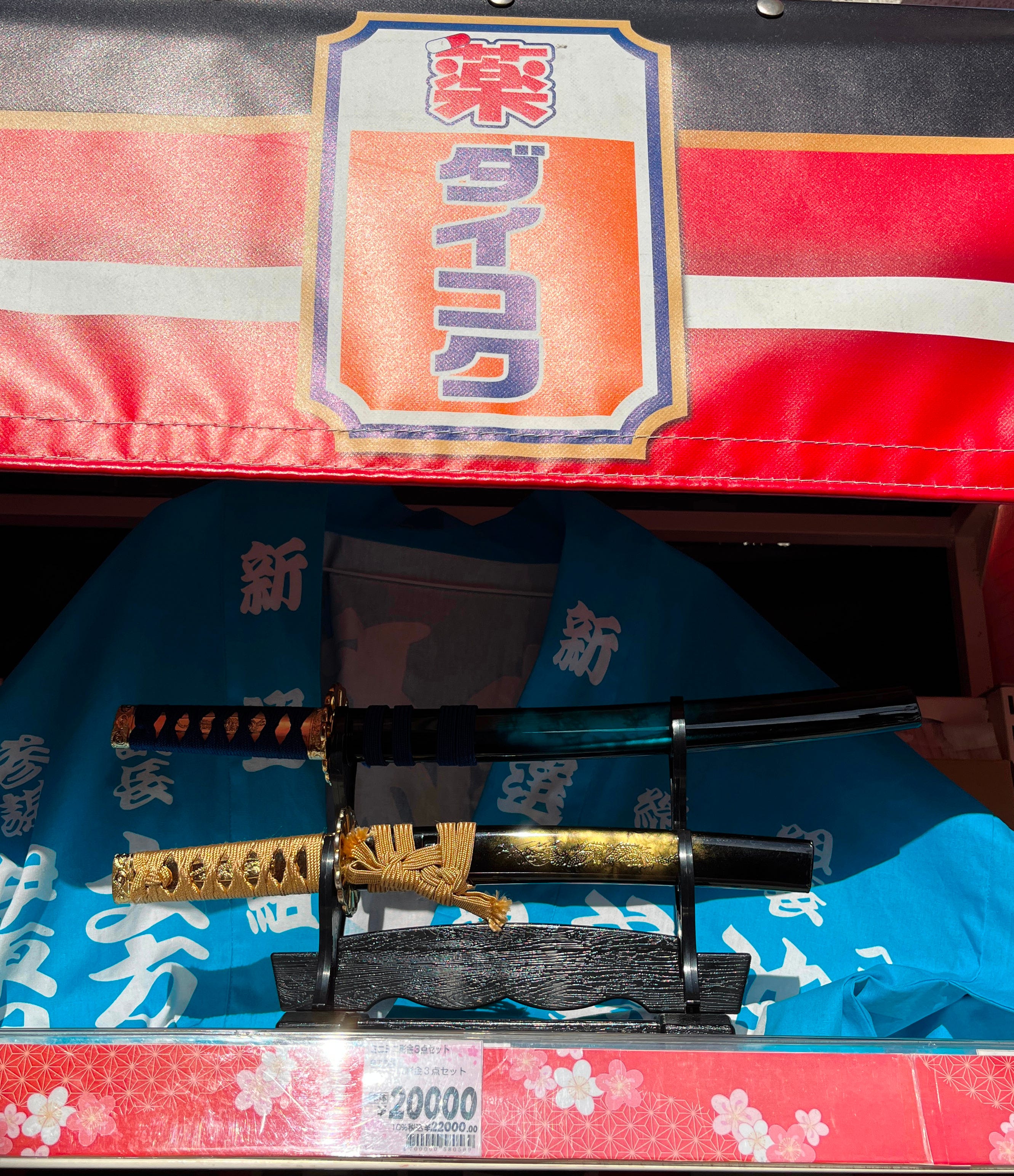
Another thing has changed. Until now, most of the tourists I saw wearing rental kimono were Asian women. Now I see plenty of men joining in, too. And people are wearing all sorts of kimono in all sorts of ways that break customs. Everyone’s having fun, so I don’t mean this as a complaint. But traditionally speaking, it’s fashion pandemonium — kimono chaos!
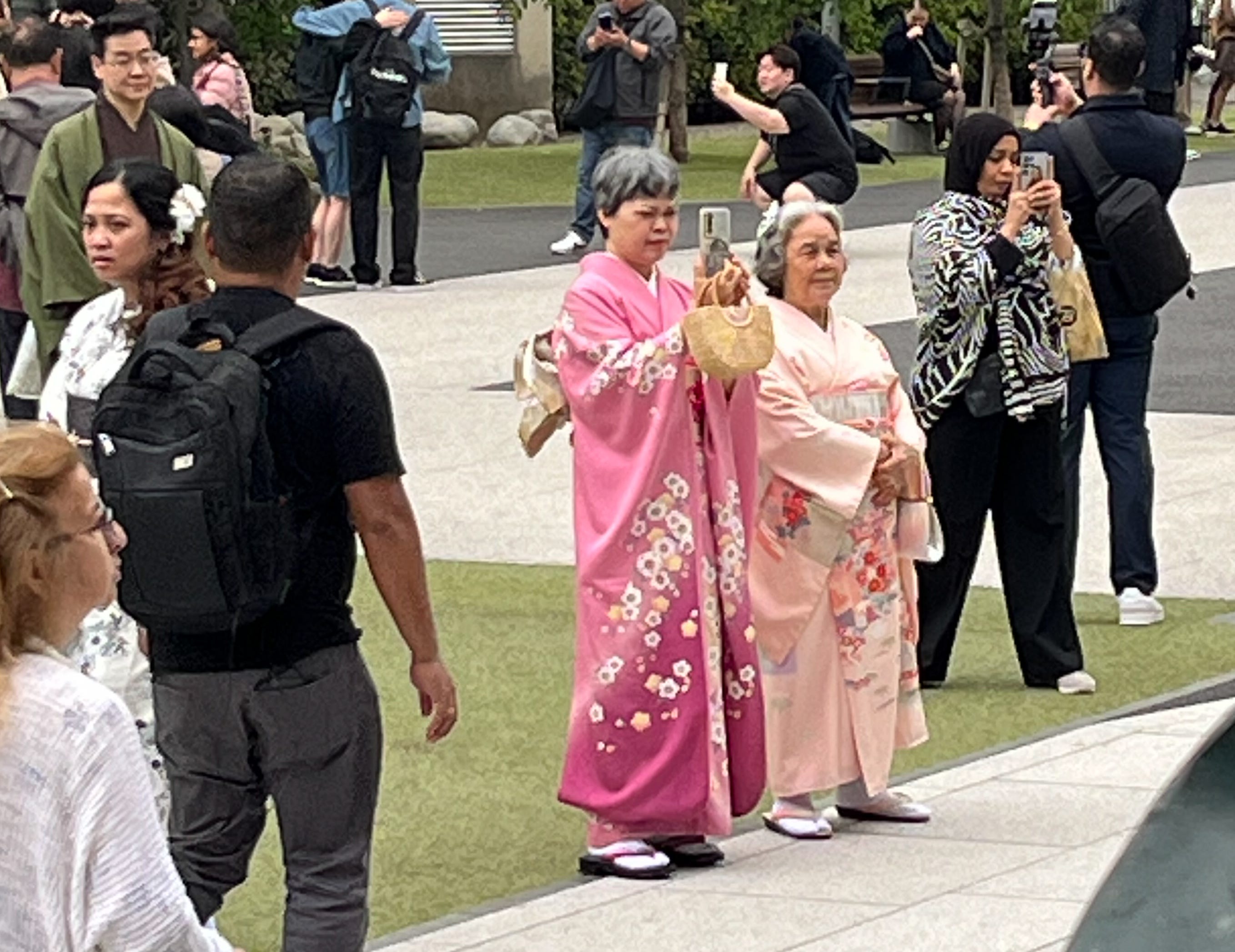
Here’s what I mean. Recently I found myself walking a ways behind behind a pair of women dressed in bright pink furisode. They wore the proper tabi footwear, so I initially assumed they were young Japanese ladies. But then I caught up with them and realized I was wrong. They were tourists – and they were nowhere near twenty! You’d never see a Japanese obasan doing this. It felt a like seeing a grandma in a hot-pink baby-doll dress. But it also made me smile. I mean, why not? If it makes you feel good, go for it.
One of my favorite kimono chaos moments happened shortly after. I spotted a Western man and his girlfriend, walking together, both in bright flower-pattern kimono. A grown man in a kimono meant for a teenage girl! With red ribbons in his hair and a traditional purse! To paraphrase Doc from Back to the Future, “where we’re going, there are no rules.” It seems Asakusa has become a safe space where anyone can feel comfortable wearing any kimono they like.
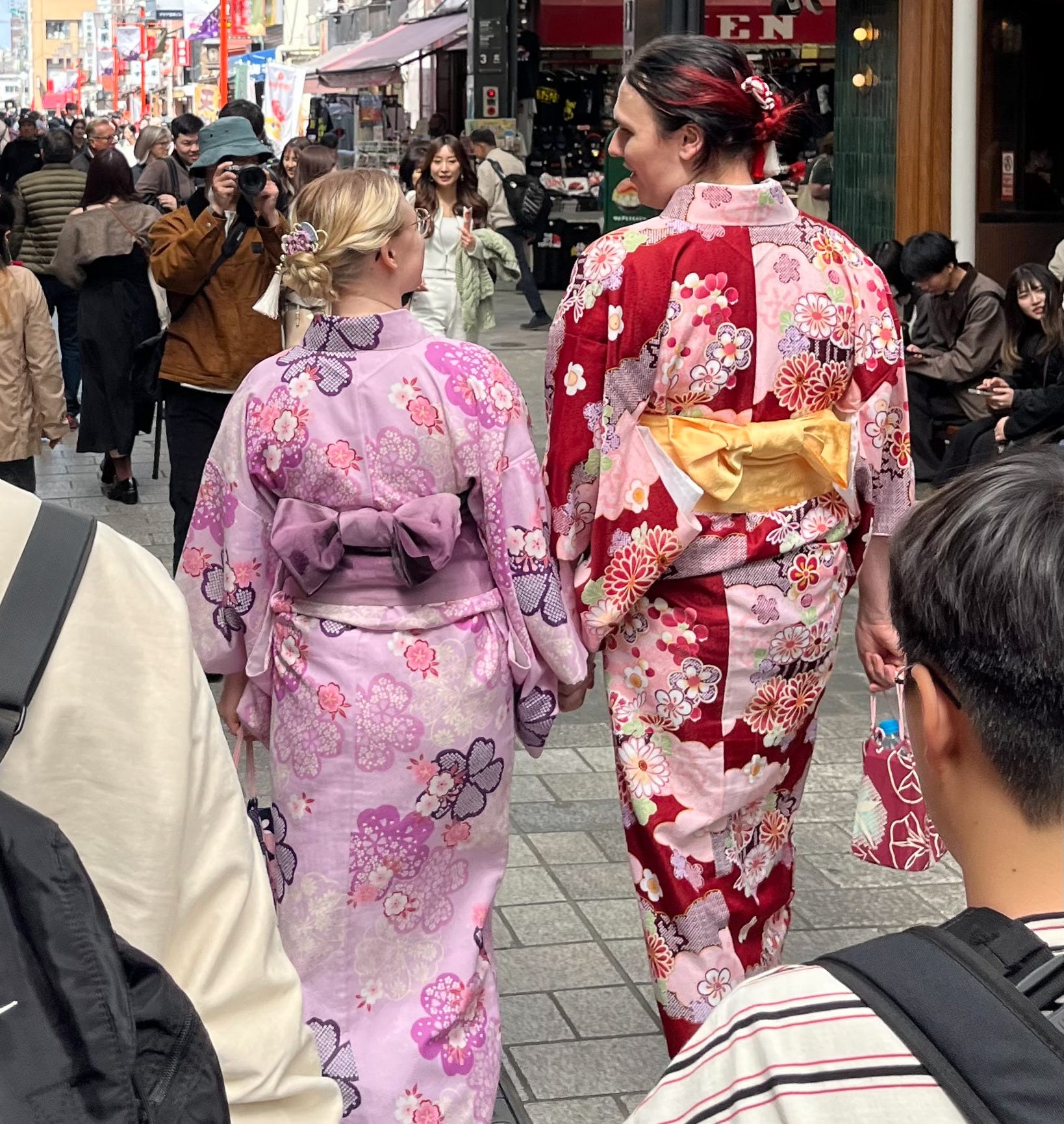
This is what I mean by saying Asakusa seems to be creating its own unique kimono culture. It’s driven by a combination of interest in Japanese culture, the rental shops run by locals, and the different worldviews and value systems of foreign visitors - all of it empowering people to wear whatever they like to wear, rather than what they “should.”
The irony is that Asakusa is deeply associated with traditional Japanese kimono culture. But today, whenever I see someone in a kimono there, I tend to assume they’re a foreigner. And I don’t seem to be alone.
A few weeks back, I was lined up to pay my respects at Asakusa Jinja, the Shinto shrine right next to Senso-ji temple. As I waited, a middle-aged Japanese woman behind me quipped to her friend, “nice kimono! Perfect choice for the season. The foreigners are really getting good at this.” It took me a moment to realize she was talking about me! Think about this: I’m a Japanese dressed in a “proper” kimono at a Shinto shrine in the heart of Tokyo’s most traditional neighborhood, getting mistaken for being a foreign tourist. I politely pretended not to hear, but couldn’t help but smile. That’s just how it goes in the Wild West-meets-East of modern day Asakusa.
It’s easy to dismiss Asakusa as a tourist trap these days. But I’m telling you, every time I visit, I see something new. Asakusa isn’t stuck; it’s evolving. It feels like a mash-up of local and global styles, the traditions of Asakusa reflected in the choices of people from all over the world.
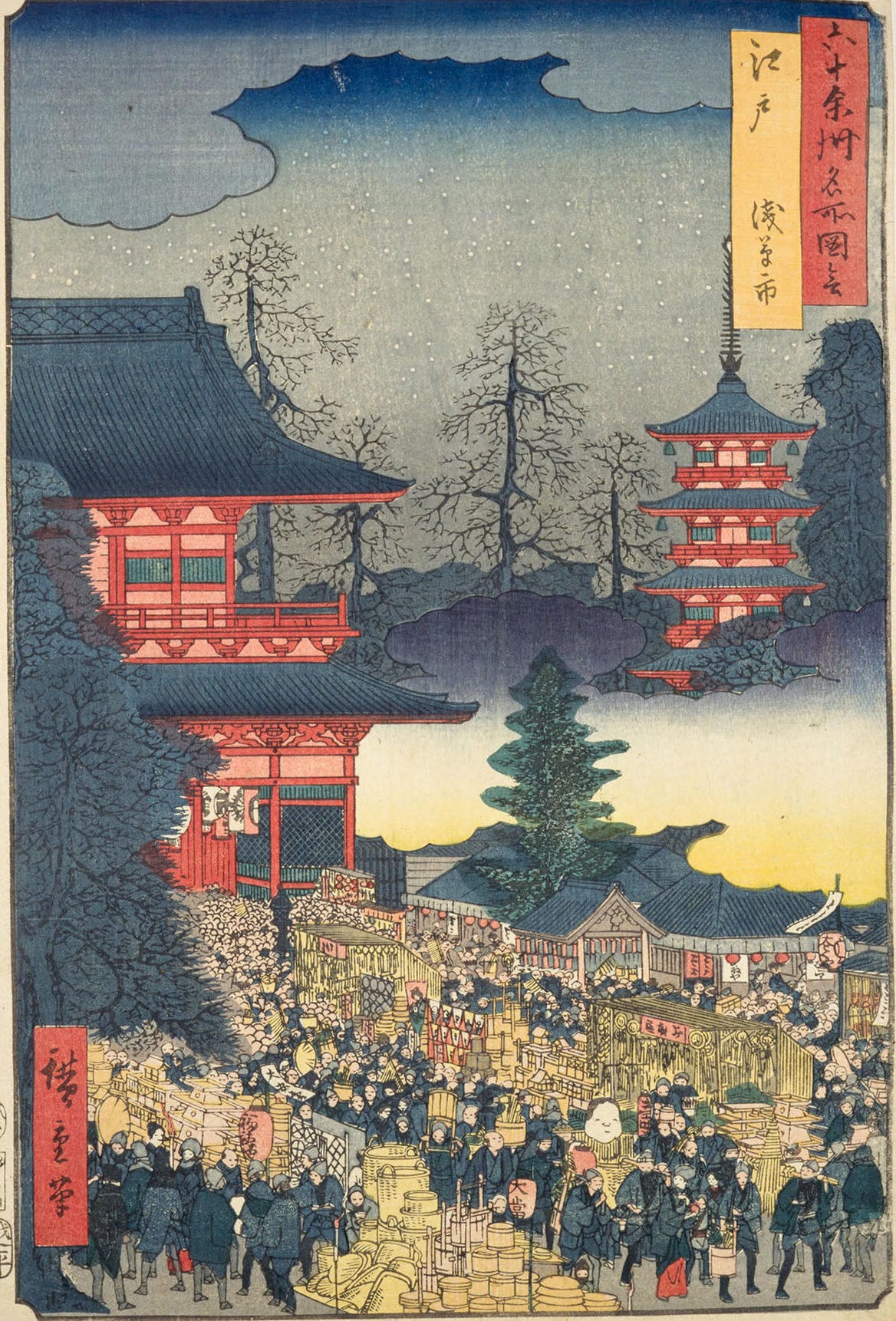
And maybe this isn’t anything new. Maybe it’s just history repeating. Maybe this is what the Asakusa of Edo, as Tokyo was known prior to 1868, felt like in times of old. It’s easy to think of it old Edo as monoculture, in terms of the country not having any contact with the outside world. But in reality, Edo, and Asakusa in particular, were busy hubs for people coming and going from all over Japan.
Asakusa has always been chaotic in its own way, a cauldron for brewing up new trends in fashion, art, literature, and language. A long history of accommodating waves of newcomers — then from all over Japan, now the world — nourished a sense of openness and inclusiveness. And it was a two-way street: Asakusa absorbed things from visitors as they passed through and went on their ways. Maybe that is what it continues to thrive as a tourist destination today.
That’s why I think of what I’m experiencing as new chapter in the history of old Edo. The players are different, but the “vibe” hasn’t changed at all. So while I’ll stick to my traditional styles, out of personal choice, I’m going to cheer on the neighborhood’s “radical inclusiveness” as I watch the creation of something new.

If you enjoyed this, you might also enjoy my book Eight Million Ways to Happiness. You can order here! (Or here if you’re in the UK.)

Thank you for this. I’m in Asakusa a lot and I’ve shifted from shock to irritation to amusement to ‘it’s fun’….though guys looking like they are at their own wedding still amuse me.
I too like Asakusa, usually staying in a hotel near Sensoji as a base for walking around. and early morning prayers at the temple I like the visuals inthe scenes in the film The Makioka Sisters (細雪, Sasame-yuki; "light snowfall" by Ichikawa Kon ) with kimono and especially where one sister dresses another in kimono.