

I was invited to write guest essay for the economic commentator Noah Smith’s newsletter, Noahopinion, on the topic of Japan’s national identity. Noah has been watching Japan for a long time, but mainly through the lenses of economics and pop culture. So it was an honor to be able to bring a different perspective to his big audience of subscribers.

As I wrote, I’ve long been fascinated by how Americans wrestle with what it means to be American, and how Japanese wrestle with what it means to be Japanese. There are many elements to that discussion, of course. But both to simplify things, and because the topic has been in the news, I focused on faith. It’s particularly interesting because many Americans see faith as a litmus test, while many Japanese don’t.
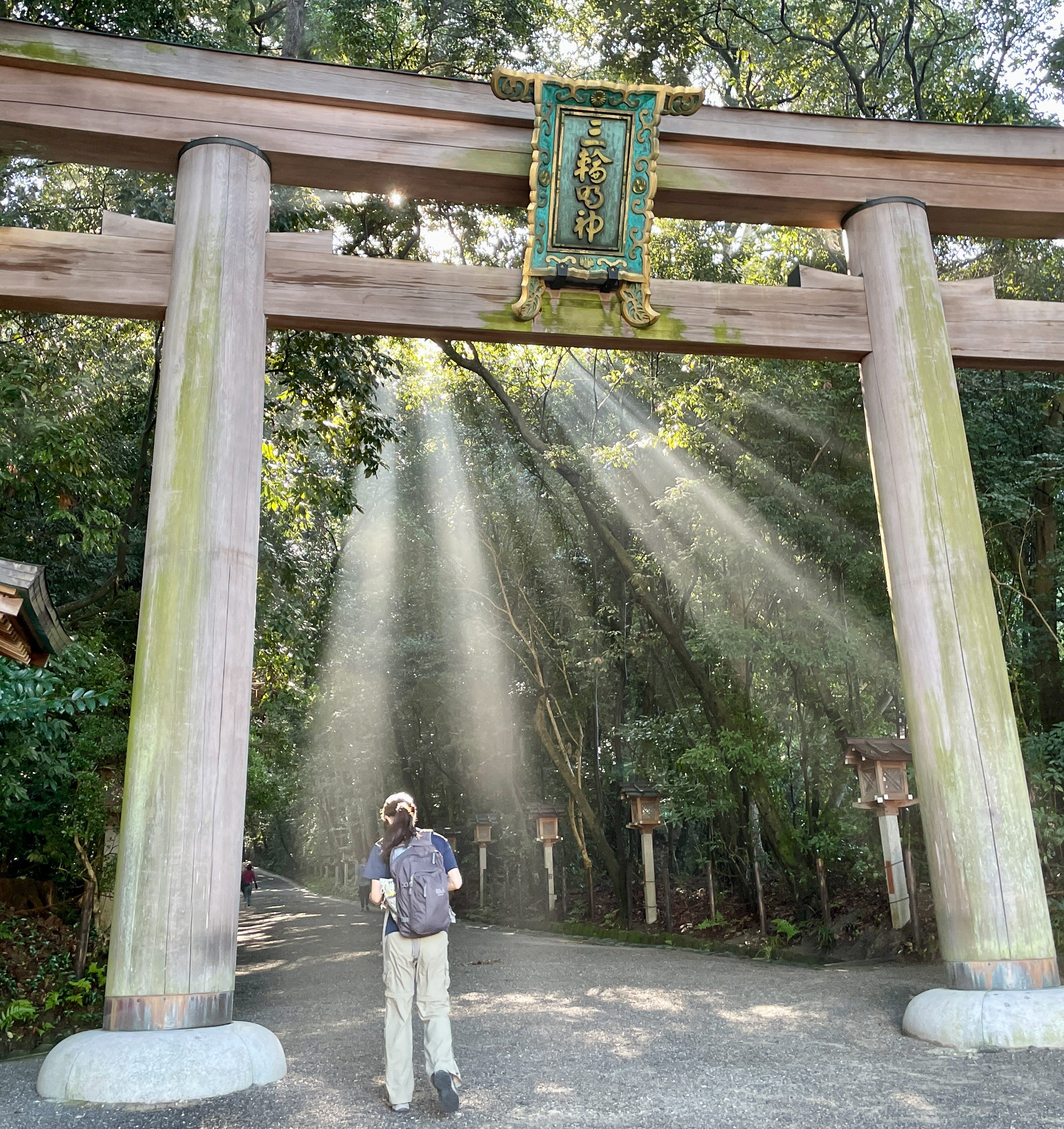
This doesn’t mean we don’t have spiritual traditions, of course. In the 19th century and even well into the postwar era, those traditions were in fact of huge interest to foreigners, who incorporated things like “Zen” or “Bushido” (scare quotes intentional) into their lifestyles. In more recent decades outside observers have mistakenly categorized us as secular or even unreligious, but that simply isn’t the case. As I never tire of pointing out, why would a secular country have three times as many Shinto shrines and Buddhist temples as it did convenience stores?
One of the critical issues I face in discussing Japanese spirituality in English is that nearly all of the key words get lost in translation. Even the most fundamental concepts do not map neatly on to one another. “Religion” is one. “God” is another. “Worship,” yet another. Even seemingly concrete ones like “altar” subtly differ in usage and (for lack of a better word) vibes.
These subtle differences don’t affect things much in casual conversation among friends, but when you start getting into deeper discussions, they can really skew things and invite misunderstandings. For instance, “religion.” Did you know that the Japanese translation of that word only entered the lexicon in the mid-late 1870s? It’s not as though we didn’t have religions, of course. But we didn’t have an overarching collective descriptive for them.
The authorities coined “shukyo” to describe evangelical Christianity of the sort Westerners began (re) introducing after the ports (re) opened to the world in 1854. The word still retains a hint of that connection even today, and has been muddied even further by the term “shinko shukyo,” which literally means new religions. Cults are a subset of this, so it’s no surprise that when strangers come asking what their “shukyo” is, many Japanese dodge the question entirely.
Then there’s “god.” Japan is a polytheistic culture. There’s no one God with a capital G, for starters. “Kami,” the term for a divine presence in Shinto, doesn’t map neatly to anything in the Abrahamic faiths. There isn’t really a hierarchy. There are plenty of kami who are avatars for things we think of as bad things, like poverty, yet aren’t seen as evil per se.
And that leads to “worship.” The closest analogue in Japanese is “matsuru,” but it’s a lot broader of a term, I feel, than worship is in English. Matsuru can be everything from a big ceremony to a solitary activity, and it doesn’t really require faith, in the sense I understand Americans use that term. No Shinto priest is going to interrogate whether you’ve really, say, let the kami of the sun Amaterasu into your heart. They just want you to be respectful. It’s more of a practice than a philosophical inquiry. Maybe that’s why we never thought to coin a word like religion before “shukyo” came along.
At one point in my essay I used the word, altar. By this I actually meant “butsudan,” as in a Buddhist-style altar often found in Japanese homes. But to tell the truth, I have a problem with “altar.” English dictionaries define an altar as “a type of table used in religious ceremonies.” First of all, most look more like cabinets than tables, but that’s a quibble. For many, however, the butsudan isn’t really religious. It is the object for the act of “kuyo,” which is another word that defies easy translation into English. Kuyo is the act of commemorating the departed, our loved ones, our family members. Commemorate! That word doesn’t really convey the natural, even casual way in which we do these things. This is why I like using Japanese words as is when talking about Japanese concepts.
There’s no end to this when you get started thinking about it. I wanted to clarify all of these things, but that wasn’t the point of the essay. So I’m going to vent, so to speak, a little here. And, of course, I go into way more detail about all of this in my book. In the meantime, please feel free to check out Noahpinion, and to comment either on the essay there or directly here. Thanks for reading!
I have been quietly observing the Japanese version of spirituality while living here for 4 decades now. It’s a much more personal approach than religion elsewhere, not nearly as judgmental and overbearing. I appreciate that Japanese people’s views are generally not colored by their religious beliefs. It’s refreshing to see that people don’t deny science or argue that the earth is flat and 6,000-10,000 years old as some adult Americans actually do. The Japanese approach seems to be live and let live. The foreign approach is much more assertive. For example, Christians insist that abortion is banned for everyone, not just their followers. The contrast is striking.
Most Western economists have a narrow professional training in their discipline, as can occur in other professions. This has not always been the case. Early in the history of modern economics, those training in economics were said to be studying "political economy". Smith, John Stuart Mill, Marx, Marshall, and Keynes are notable examples. To varying degrees they based their economics in history, culture, psychology, politics, geography and so on. Economics could not be isolated from the context in which it took place. Later, in "market economies", in the economics discipline the view took hold that there were universal economic principles based on capitalism, applicable to any society through time, place, and societal type that could evaluate whether economic outcomes were more or less efficient. Culture and history, for example, didn't matter much. This narrower perspective leads to misunderstanding and misjudgments about the role of context (that other disciplines study and can provide broader perspective) in shaping how and why societies pursue their changing values through economic activity. Thus, the inability to address the differences in and role of cultural meaning - in wording, practice, and shared values in different economic settings. This explains in good measure why most economists today cannot place culture withing their economic analysis. Fortunately - and by deliberate choice - I chose a graduate education in political economy because I wanted to understand the world past, present, and future in all its complexity better rather than exclude important ways (culture) shaping economies. Which is all a long way of saying, I understand and appreciate your essay drawing attention to the differences in meaning to different - and similar, but not the same - cultural values and practices. Context matters.