

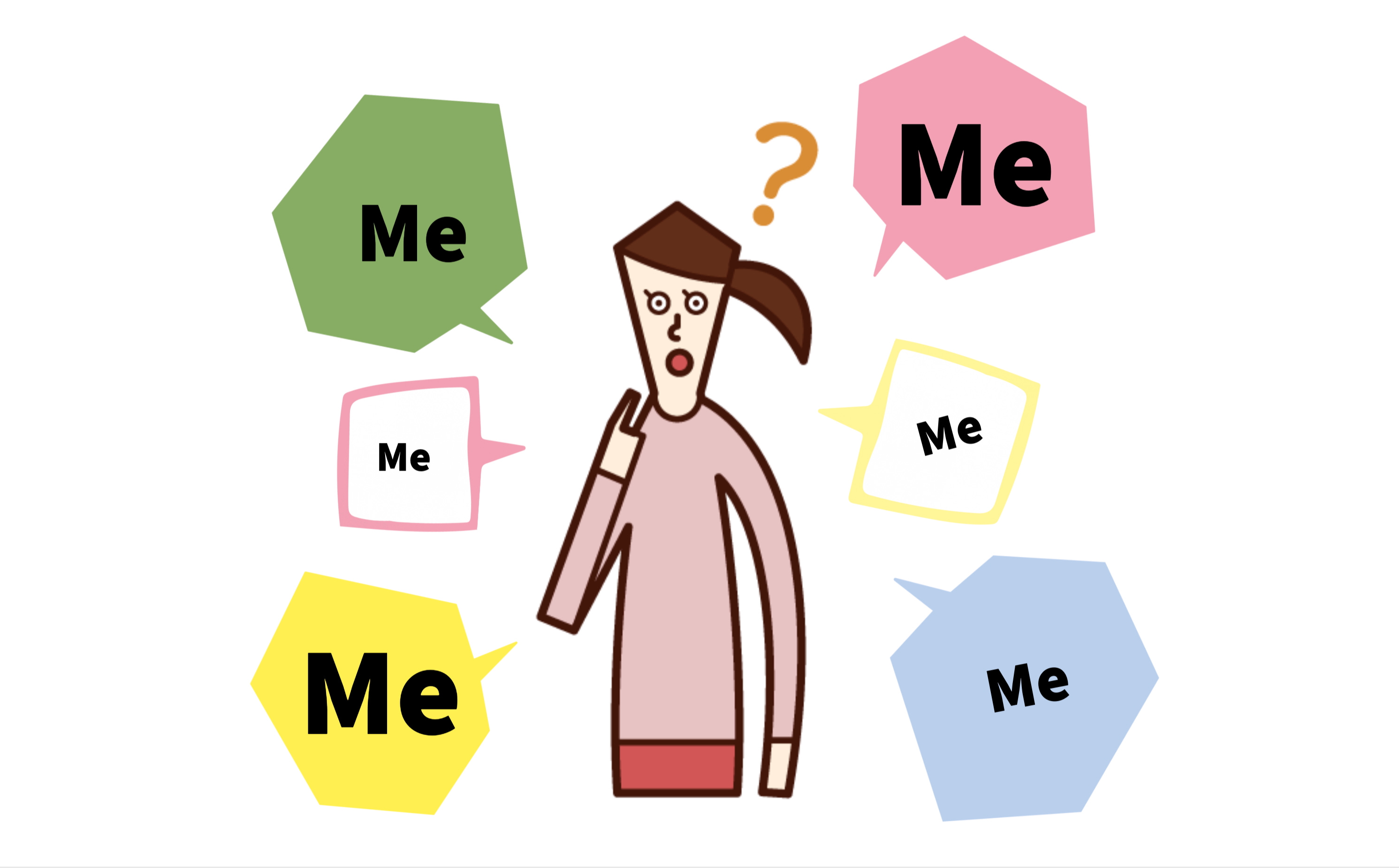
A couple days ago, my husband and I had lunch at a local neighborhood restaurant. It is a literal mom-and-pop place: the husband is the “master,” meaning he cooks, and the wife takes orders and brings out the food. They are the only employees. The menu is simple. There are only three choices, described with numbers. “1” is vegetarian. “2” is fish. And “3” is chicken. The style varies by season, but you don’t have any control over that. Your only other choices are whether to get white rice or brown rice, in small, regular or large portions. This is how it works at “teishoku,” or “fixed-menu” restaurants, which are a beloved feature of the Japanese dining scene, reasonably priced, homey, and often quite healthy. We have been customers of this particular one for more than twenty years. It’s our go-to place when we need to eat out and don’t want to make a big production of it.
Normally we sit at a table on the second floor. But last time, all of our usual spots were full. So we took two stools at the first floor counter. This put us right next to the kitchen. So instead of the wife, the husband popped out to take our orders. I picked my usual, 1, while my husband picked his, 3. Both with our usual brown rice. Then the master asked us what size we’d like.
“Regular size, please,” I said in Japanese.
Boku mo, my husband said.
Boku mo means “me too.” Boku is an informal personal pronoun, generally used by boys and young men.
“So you call yourself ‘boku’?” asked the master, mildly surprised.
“Sure,” replied my husband.
“Actually, he uses ‘watashi’ too, in formal circumstances, like business,” I interjected. “He alternates between the two depending on the situation.”
Watashi is the most commonly used personal pronoun in Japanese, gender-neutral and casual. I use it a lot myself. It’s also useful in that you can make it more formal by adding a “ku” in the middle: watakushi. You’ll hear it used in formal speeches at wedding ceremonies and such; politicians use it all the time. I used to call myself watakushi when I was learning miko-mai, shrine-dancing. Especially when I addressed my elderly sensei, or when I talked to her students in front of her. The circumstances felt very conservative, and I thought it was the right thing to do.
This brings us back to boku. The reason why the master asked my husband about his pronoun is because he used to call himself boku, too. But now he feels strange doing it, because of his age. I’d guess he is about 70.
“I just started to feel embarrassed,” he laughed. “But I can’t call myself ‘washi’ all of a sudden, either. Know what I mean?”
I do. Washi is a pronoun for older males. But in modern times, it feels a little crusty, a little old-fashioned. The master doesn’t feel like that kind of person to me. He has a huge collection of CDs (well, I suppose those are a little old-fashioned!) and is a walking dictionary of jazz music. He often regales us with tales of he and his wife having traveled to see some legend in concert. Washi really doesn’t fit his image.
But I also understand where his unease around boku is coming from. Stereotypically speaking, boku evokes a sense of naivete, innocence, and inexperience – not in a bad way, but in a “green” kind of way, with one’s future ahead. It’s also, to be frank, commonly used by kindergartners.
That said, it isn’t at all strange to hear it used by those well out of short pants, too. Haruki Murakami’s early novels all center on a laconic, hip protagonist only identified by his preferred pronoun of boku. This serves to accentuate his search for his true self. In other words, boku may be a young man’s thing, but you’re only as old as you feel. The restaurant’s master feels like a boku, but perhaps he’s now having a hard time reconciling what he sees in the mirror. As for my husband, who’s a good 20 years younger, boku is simply a neutral, semi-casual pronoun. It’s all relative.
This really got me thinking. I’ve argued that, despite the way foreign observers have often portrayed Japanese society, which is to say regimented and rigid, that our worldview is actually marked by a great deal of flexibility. It’s like how Japanese often say they aren’t religious if cornered with the question, but then fill out surveys saying they pray at Shinto shrines and Buddhist temples.
We’re a very contextual kind of culture. We change the words we use when speaking to those above us, to those we grew up with, to children. And we change the way that we refer to ourselves.
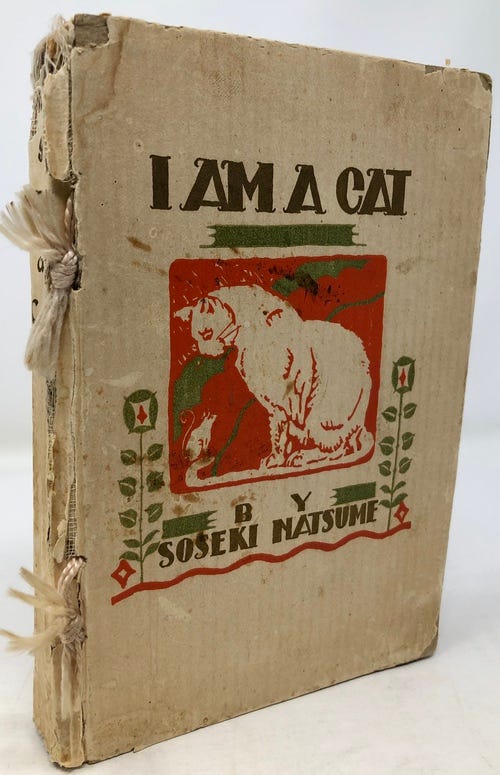
English only has one first-person singular pronoun: I. This means English-speakers need to find other ways to characterize themselves. In Japanese, your choice of “I” can really change the tone of things. For instance, there’s a classic book by Soseki Natsume called Wagahai wa neko dearu, which takes its name from the book’s first line. It translates into “I am a cat.” But the I isn’t a “normal” I. Wagahai is an archaic pronoun, very regal, very elevated, even professorial; and the dearu ending drives it home, sounding like the punctuation on the beginning of a lecture series. That a cat might choose to refer to itself this way is both surprising, and if you know cats, very believable. Meanwhile, this nuance is lost in English. “I am a cat”? Okay, so what?
“You don’t use ‘ore?’” the master asked my husband. This is another common male pronoun, but very rough, the sort of thing used by brothers, or college roommates, or those trying to act tough. I’ve never heard Matt use it; I guess he feels it doesn’t suit him. If he did I’d ask him to stop – there’s too much potential to upset others, or make oneself sound dumb. If you want to talk rough in Japanese, you need to know, in your bones, when to use rough speech and when not. It’s a dangerous game, socially speaking.
I know that pronouns have become a highly politicized issue in America. It’s difficult for me to imagine this happening in Japan. Third-person pronouns exist in Japanese – kare (he), kanojo (she), but in actual practice we rarely use them in daily speech. In English, linguistically speaking, people must compel others to use preferred pronouns to characterize them, whether he, she, or they. In Japanese, this doesn’t happen; you characterize yourself through your choice of first-person pronoun.
There are a lot to choose from. Boku, watashi, watakushi, atashi, atazu, atakushi, atai, wai, ore, oi, oidon, washi, wai, uchi, oira, asshi, ora, a, wate, toho, temae, wagahai, soregashi, sessha, shosei, jibun… The list goes on. Each has a different “vibe,” a different stereotype associated with it. And you don’t have to stick to one for life, or even in the same conversation.
They say that there more than seventy ways of referring to oneself in Japanese. But I’m not sure I buy that. Because you can make your own pronouns, too! The late Shigeru Mizuki, a favorite manga artist of mine, famously referred to himself as Mizuki-san, with the san in katakana. This is really odd-sounding in Japanese, but it really suited him, because he was a real character. So I don’t believe there are only seventy — like the eight million kami of Japanese spirituality, there’s always room for more.
Which brings us back to the conversation at the restaurant. I asked the owner what he did use, since he’d stopped using boku.
“None,” he replied. “When I have to use a pronoun, I go ‘Hmm?’”, raising his eyebrows and pointing at himself. And that’s another choice, too!
I use "boku" as well despite my middle age and male sex. My parents tried to get me to stop, but I just couldn't be bothered. "Watashi" seems so overly formal to me, though I understand that it's pretty neutral and is more appropriate in many situations (e.g., workplace). My father often used "ore" around his colleagues, friends, and relatives and thought I should too. Not exactly being a "man's man," I hated it and never took it up. Amongst businessmen of a certain age, it was very common. In my experience, businessmen still do, while male civil servants tended to use the more formal (and perhaps "civil" in more ways than one) "watashi" or "watakushi."
Lately I've also noticed, at least in social media and anime/manga, girls and young women sometimes use "boku" in a mildly ironic way, which I thought was pretty cool.
Anyway, maybe I should go around saying "washi" or "warawa" since my body seems to be telling me I'm getting old...:)
Having gone through the same journey as Matt-san and SM-san in the comments below, I settled on "watashi" or "jibun." Too old for "boku," and never having grown up on Japanese playgrounds, "ore" never felt authentic. The most surprising ones for me were at my first job, at a Japanese company. My boss had some flair and liked to call me "onushi お主." The office word for oneself was "shoushoku 小職," literally little jobber!